
 Photo by Jatin Shah / MagiK Box
Building on Your Own Lot in Port St. Lucie: The Lot
A finished spot-lot build on an ordinary Port St. Lucie street. The frontage, the setback and the neighbours either side are what you are buying before the house exists.
In 2017 I sold a vacant lot in Port St. Lucie for twenty-five thousand dollars. It was one of the first things I ever sold here. Comparable buildable lots in the city list for five or six times that today, nine years later.
That one transaction is a fair summary of what makes this city different from the markets south of it. In most of Palm Beach County, and much of Martin County, buying a piece of land and putting a house on it is either impossible or a luxury exercise for people with an architect on retainer. In Port St. Lucie it is an ordinary path to a new home, and a lot of people take it every year.
Spot-lot building — buying an individual platted lot and having a builder put a house on it — is a genuine business here. Further south it is a niche.
Here is how it actually works, what it costs beyond the lot, who builds, and when it is the wrong idea.
This is part one of three on building in Port St. Lucie. It covers the lot itself — finding one, what it costs to make it build-ready, and why the parcel matters more than the company you hire. Part two covers the builders, and part three covers the money and the timeline.
Why Port St. Lucie Has the Lots and the Markets South of It Do Not
Port St. Lucie was not built the way most Florida cities were built.
General Development Corporation bought roughly 40,000 acres along the North Fork of the St. Lucie River in 1958 and platted an enormous residential grid across it — streets, blocks and individual lots — before there was much of a city to speak of. The place was incorporated in April 1961 with about 250 homes standing on it.
That grid is still there, and a great deal of it is still empty. The city filled in unevenly over sixty years: some streets are complete, others hold three houses and a dozen vacant lots between them. Those gaps are the inventory. It is why you can still buy a quarter-acre residential lot in a built city, on a paved road, and build on it.
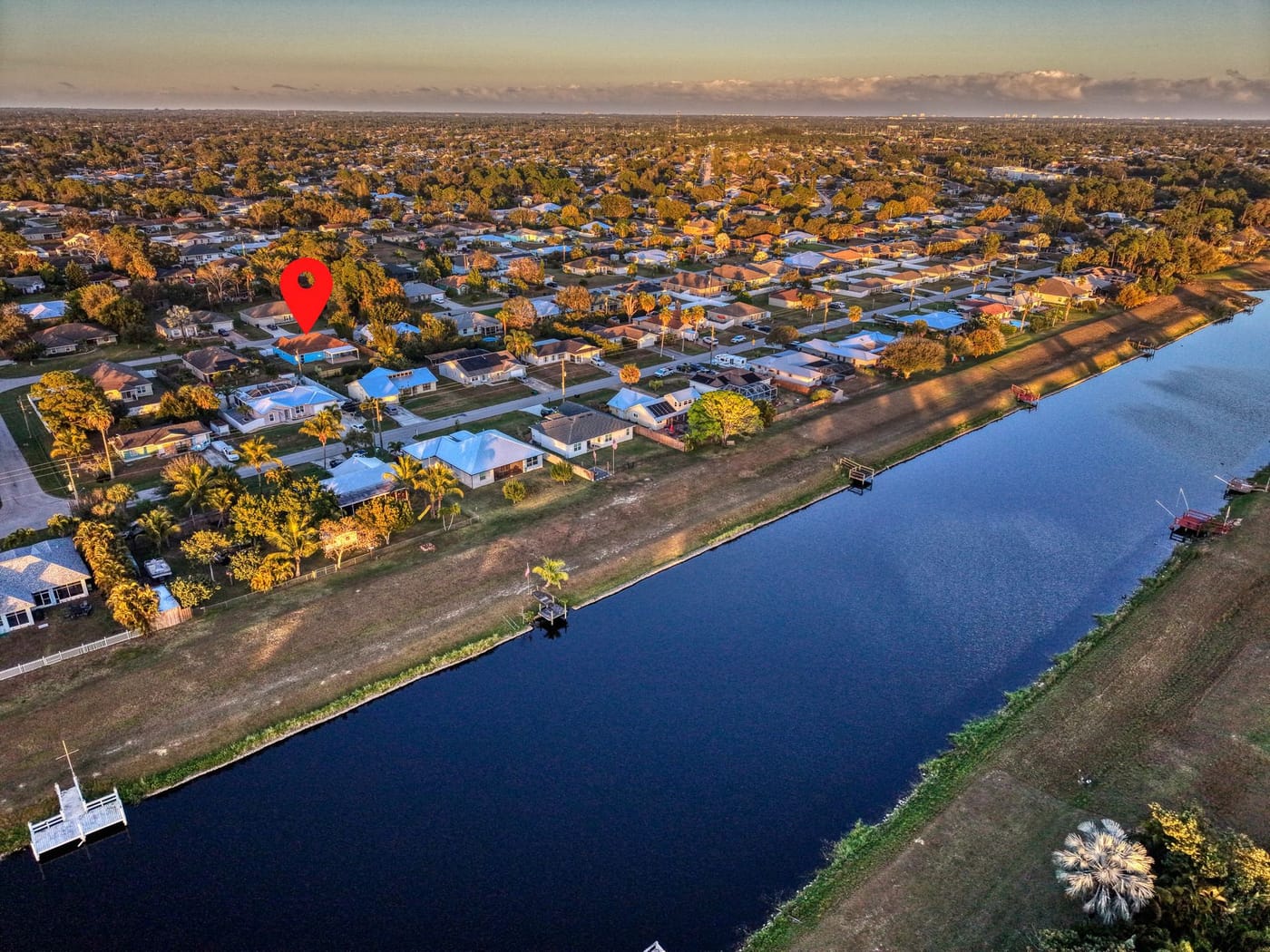
Palm Beach County cannot offer that at any scale, because it is substantially built out. What remains down there is infill priced accordingly, or acreage — which is a different product with different rules, covered in our Loxahatchee guide.
That difference is the whole reason this article exists, and it is worth being blunt about: the ability to do this is one of the few things Port St. Lucie can offer that the markets to the south structurally cannot.
Most Spot Lots Are Not in an Association
This is a large part of the appeal and it deserves saying early.
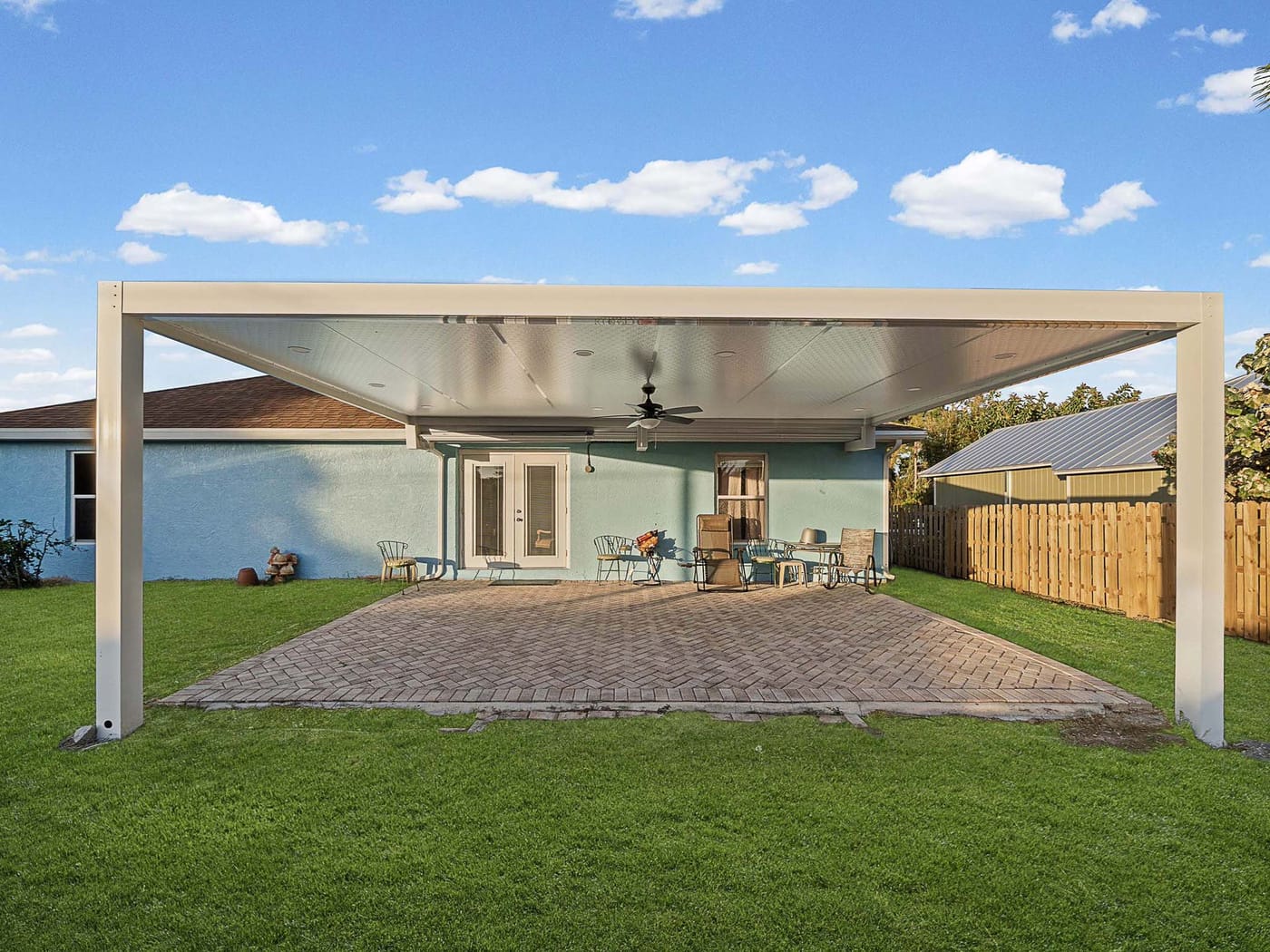
Because the grid was platted decades before the master-planned era, most of it sits outside any homeowners association. In much of it there is no CDD either — the assessment that finances a community's infrastructure and lands on the tax bill, which our neighborhood guide covers in detail.
Practically that means no monthly dues, no architectural review board, no approval process for a fence or a paint colour, no rental restriction written by a board, and — where zoning permits it — somewhere to keep a boat or an RV. That last one is genuinely scarce in newer Florida housing, and for a lot of buyers it is the whole reason they end up out here.
The monthly arithmetic matters more than people expect. A house with no HOA dues and no CDD assessment can carry cheaper every month than a nominally cheaper house inside a master-planned community. Run the total payment, not the sale price.
The honest counterweight: no association also means no amenities, and no architectural control over your neighbours either. Nobody is stopping the house across the street from being painted a colour you would not have chosen, or from parking a project car on the driveway. Streets in the grid vary, and that variation is the price of the freedom.
Free — August 2026 St. Lucie County Numbers
Houses Are Tight Here. Condo Buyers Still Have Choice.
In August 2026, houses sold at 95.5% of asking in 54 days, so there was less room than most buyers expect. Condos ran 7.6 months of supply and 82 days, which is a different negotiation entirely. Both sets of numbers, in one free PDF.
What a Spot Lot Actually Costs to Make Build-Ready
The lot price is the number buyers anchor on, and it is the smallest part of the decision.
Between the lot and a finished house sits a set of costs that do not appear in a builder's advertised base price. Depending on the parcel, expect some combination of:
- A boundary survey, and often a separate elevation certificate
- Soil and compaction testing, and fill where the lot needs it
- Clearing, grubbing and tree removal, subject to the city's tree rules
- City and county impact fees
- Building permit and plan review fees
- Water and sewer connection, or a septic system and well
- A driveway and, on many lots, a culvert
- Temporary power during construction
- Utility tie-in and any easement work
None of those are exotic and none of them are optional. What varies is which apply to your specific parcel, and the answer changes lot to lot on the same street.
Fee schedules change, so get the current numbers from the city and the county rather than from an article — including this one — or from a builder's estimate sheet prepared some months ago.
Utilities Decide the Budget More Than the Lot Does
This is the single biggest swing factor and the one buyers underestimate most.
Because the grid was platted long before it filled in, a large share of Port St. Lucie was built on septic rather than city sewer, and the city has been running a septic-to-sewer conversion programme to connect those properties. The mechanics of that programme, including the grant and payback options, are set out in our local guide.
For a vacant lot the questions are sharper than they are for a finished house:
- Is there city water and sewer at the street, or only water, or neither?
- If a connection exists, what does tapping into it cost, and is there a pending assessment attached to the parcel?
- If there is no sewer, will the lot support a septic system and drainfield at the size of house you intend to build?
- Is the parcel inside a planned conversion area, and if so, what happens if you install septic now?
Two adjacent lots can answer those differently. Get the answers in writing from the city's utility department before the lot goes under contract, not after.
The Lot Matters More Than the Builder
If there is one thing to take from this page, it is this: the biggest decision you will make is where the lot is, not whose name goes on the house.
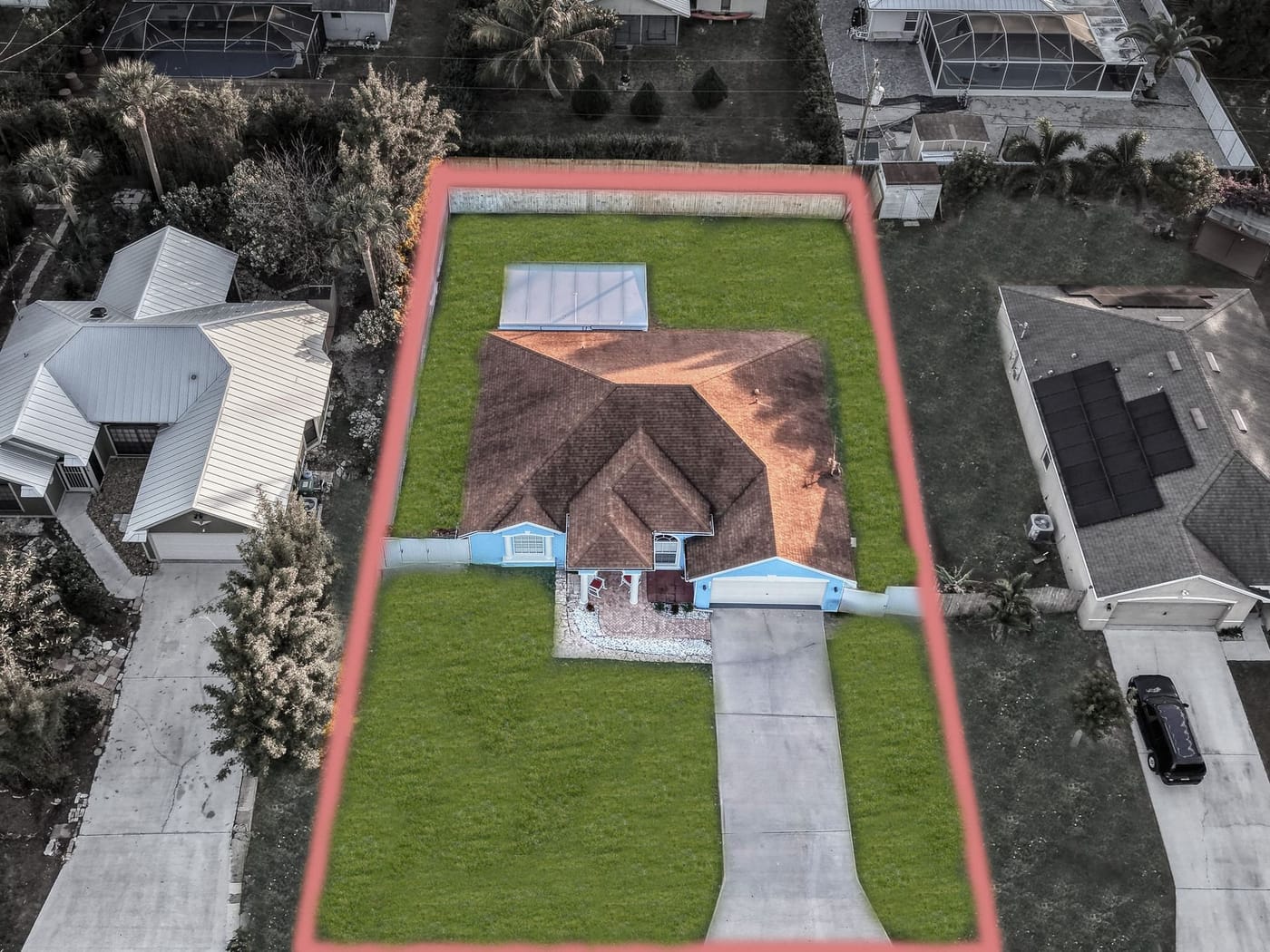
Builders can be changed. Plans can be changed. Finishes can be changed. The parcel cannot. You are buying a location for the life of the property, and in a city still filling in unevenly that decision carries more weight than it would in a finished neighbourhood.
What actually separates a good lot from a cheap one here:
- Which part of the city it sits in. A lot out west and a lot off US-1 give you different commutes, different drive times to the coast, and different daily routines — our local guide breaks the districts down.
- How much of the street is already built. A lot on a street that is three-quarters finished is a different proposition from one on a street with four houses and twenty empty parcels. The second will fill in eventually, but you will live through it, and it affects how the finished house appraises and resells.
- Whether sewer is at the street. This is the largest single cost swing on the whole project.
- What is approved on the vacant parcels around it. In a grid still filling in, your future neighbours are not houses yet — they are entitlements. Check them.
- Flood zone and required finished floor elevation, which vary considerably across the city's canal and drainage network.
- Distance to an arterial. Close is convenient and it is also loud. Walk it at rush hour.
Get the lot right and an average builder still leaves you in good shape. Get the lot wrong and the best builder in the county cannot fix it.
Be Careful With the Builder's Own Lot
Several builders hold lot inventory of their own and will offer to sell you one as part of the package. That is convenient, and it is also where people get caught.
A builder's remaining lots are, by definition, the ones nobody has bought yet. Sometimes that is timing. Often it is the lot: an awkward shape, poor drainage, no sewer at the street, a rear boundary onto an arterial, a location three streets from anything. The house on top of it may be perfectly good. The parcel underneath it is the part you cannot renovate later.
So look at a builder's lot at least as hard as you would look at one on the open market, and ideally harder — because in that conversation the person showing it to you is also the person selling it. Price it against comparable lots listed independently. If the builder's lot is cheaper, find out why before you decide the discount is a win.
There is nothing wrong with buying a builder's lot. Plenty are fine. Just do not let the convenience of a package deal substitute for the diligence you would do on the land if you were buying it separately.
What to Verify Before You Buy the Lot
- Zoning, and the minimum and maximum house size the parcel allows
- Setbacks, lot coverage and height limits
- Whether the lot sits in an association, and if so what it requires
- FEMA flood zone and required finished floor elevation
- Water, sewer or septic, and the cost of connection
- Impact fees and permit fees, current figures from the city and county
- Soil condition and how much fill the lot needs
- Tree survey and what the city will and will not let you remove
- Easements, drainage and any recorded restrictions
- Access — paved road frontage, and whether a culvert is required
- What is approved on the parcels around it
In a city still building out, that last one matters as much as anything on the lot itself.
The Bottom Line
Port St. Lucie is one of the few markets in this part of Florida where an ordinary buyer can still purchase a lot and put a house on it. That is a genuine advantage over the built-out markets an hour south, and it is worth understanding properly.
But the lot is the decision. Get the parcel right — the utilities, the site work, the drainage, the road frontage, what is approved next door — and a competent builder will give you a good house on it. Get the parcel wrong and the best builder in the county cannot save it, because the costs that break these projects are almost always in the ground rather than in the house.
When you have a parcel you like, the next question is who builds on it. That is part two.
Community Guide
Neighborhoods, schools, prices, and lifestyle — all in one place.
Port Saint Lucie Market Trends
Live data from the local MLS.
Thinking about Port St. Lucie?
We're local experts — let's find the right home for your move.
Homes for Sale in Port St. Lucie
Single-family homes $500k+, updated daily.
Free — August 2026 St. Lucie County Numbers
Houses Are Tight Here. Condo Buyers Still Have Choice.
In August 2026, houses sold at 95.5% of asking in 54 days, so there was less room than most buyers expect. Condos ran 7.6 months of supply and 82 days, which is a different negotiation entirely. Both sets of numbers, in one free PDF.
Free instant PDF · No obligation · See what's inside →
Frequently Asked Questions
Can you still buy a vacant lot and build in Port St. Lucie?
Yes, and it is one of the few markets in this part of Florida where that is an ordinary path rather than a luxury project. Port St. Lucie was platted as an enormous residential grid by General Development Corporation starting in the late 1950s, long before the city filled in, and a great deal of that grid is still vacant. Palm Beach County is largely built out by comparison, so what remains there is infill priced accordingly, or acreage.
What does a buildable lot cost in Port St. Lucie?
Comparable buildable residential lots have recently been listing in roughly the $130,000 to $150,000 range, with larger parcels higher. Be careful with the citywide average land figure quoted on listing portals — it is skewed upward by acreage and commercial parcels and is not what a residential building lot costs. Confirm current pricing for the specific area you are looking at.
What costs come after buying the lot?
Survey and elevation certificate, soil and compaction testing, fill, clearing and tree removal, city and county impact fees, permit and plan review fees, water and sewer connection or a septic system, a driveway and often a culvert, temporary power, and utility tie-in. Which of these apply changes lot to lot, sometimes on the same street, and they routinely add up to more than buyers expect.
Is the lot or the builder the more important decision?
The lot. A good builder cannot fix a bad parcel, because the costs that break these projects are usually in the ground — fill, drainage, utility distance, access — rather than in the house. Choose the parcel first and carefully, then choose who builds on it.
Keep Reading
This article is provided by DO Homes Group at Premier Brokers International for informational purposes only and does not constitute legal, financial, tax, or investment advice. Market statistics, pricing, availability, HOA fees, and community details change frequently and may have changed since publication. School assignments, boundaries, and ratings may change — verify all school information directly with the appropriate school district, and consult official public safety resources for any crime data relevant to your search. Verify all details independently and consult the appropriate licensed professionals before making any real estate decision. DO Homes Group is committed to Equal Housing Opportunity and does not discriminate on the basis of race, color, religion, sex, handicap, familial status, or national origin.