
 Photo by Robert Bye / Unsplash
Best Neighborhoods in Port St. Lucie, Florida
Choosing where to live in Port St. Lucie is less about picking a traditional neighborhood and more about picking the part of the city that supports your daily routine. The districts differ far more than the housing inside them does.
They vary in housing age, property type, amenities, association fees, access to major roads, and proximity to shopping, schools and recreation. So what follows is organized by objective characteristics — property type, price tier, build era, amenities, and the association and CDD structure that determines what you actually pay monthly. The right choice depends on what matters to you, not on a universal ranking.
Master-Planned With a Town Center: Tradition
The city's flagship planned community, on the west side, built around Tradition Square — shops, restaurants, community events and public gathering space in a walkable center. The broader area takes in numerous residential communities, parks, trails, healthcare facilities, businesses and continuing development.
What distinguishes it: the developer programmed the town center and retail before selling homes, which is backwards from how Florida suburbs usually develop and the reason Tradition functions as an actual center rather than a strip mall with houses behind it.
Housing runs to townhomes and villas, single-family homes, gated communities, age-qualified communities, new-construction neighborhoods, and larger homes with extensive amenities.
Objective characteristics: newest construction in the city, walkable town center, extensive amenities, HOA, and CDD assessments in much of it.
Trade-offs: you are on the far west side, so the beach, US-1 and the eastern districts are a real drive. Not every neighborhood carrying the Tradition name is within walking distance of the square, and the area keeps adding neighborhoods and commercial development — so separate what is open today from what is still planned or under construction.
Because association structures vary between neighborhoods, confirm HOA dues and what the association maintains, master-association fees, special-district assessments appearing on the tax bill, any club or amenity fees, rental and occupancy restrictions, and construction planned nearby. Do not assume every home carrying the Tradition name has the same amenities, fees or access to the town center. Confirm the CDD amount and remaining term in particular — see below, because that is the number that catches people.
Golf: PGA Village and The Legacy
A serious golf destination. PGA Golf Club runs three championship courses — two by Tom Fazio, one by Pete Dye — plus a short course and extensive practice and instruction facilities, with residential neighborhoods laid out around the layouts rather than the reverse.
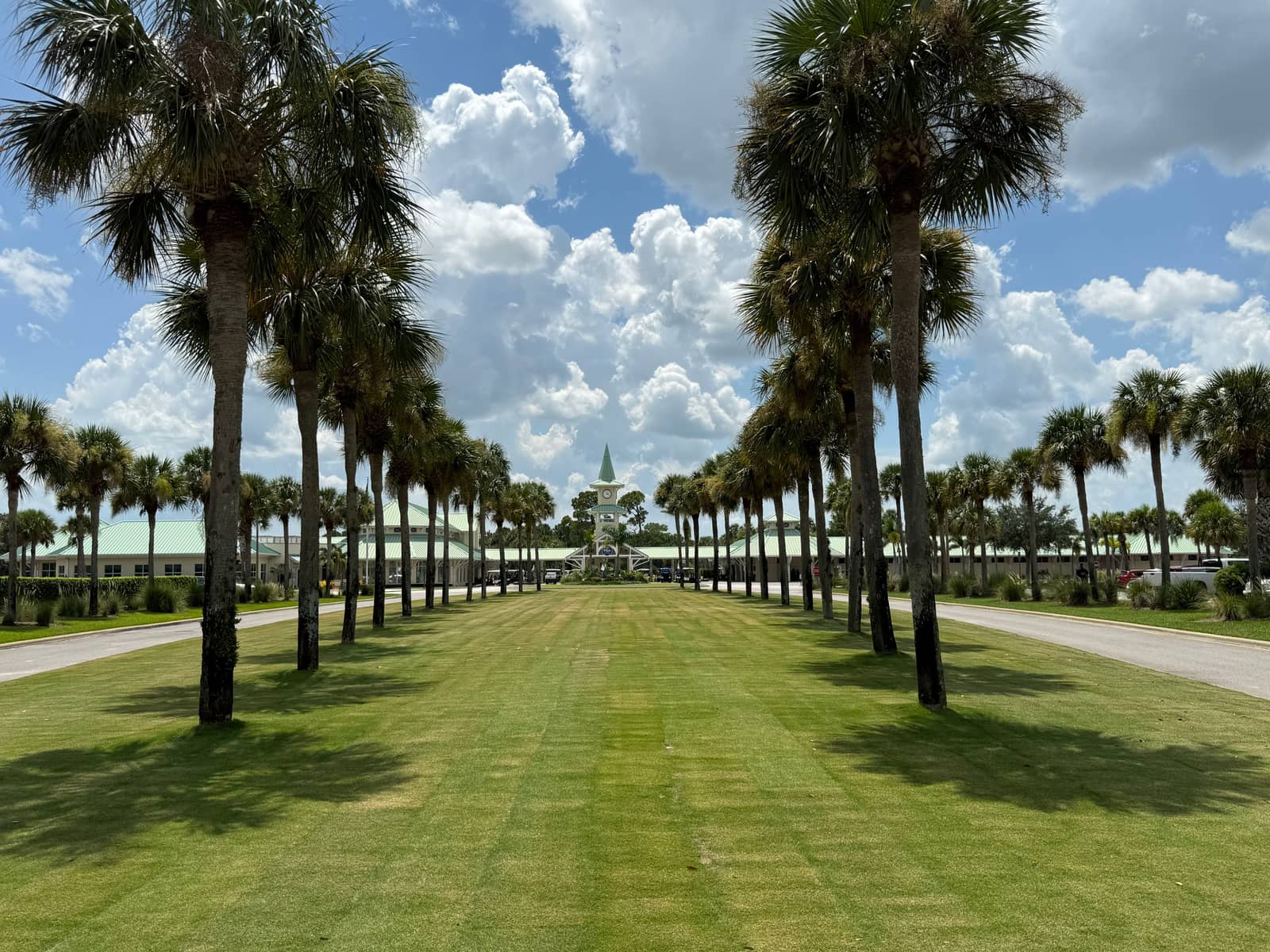
The wider PGA Village area holds several communities rather than one uniform neighborhood: single-family homes, villas and condominiums, gated sections, golf-course properties, age-qualified communities, and both newer and established homes.
Objective characteristics: golf-course frontage in much of it, established construction, HOA, range from attainable to upscale, some sections with additional club structure.
Trade-offs: a PGA Village address does not automatically carry the same golf access or membership rights. Confirm whether membership is required, optional or separate; which courses and amenities are actually accessible; membership dues and initiation fees; HOA and master-association fees; maintenance responsibilities; rental restrictions; and whether the property sits inside PGA Village or simply near it. The individual community documents matter far more than the name.
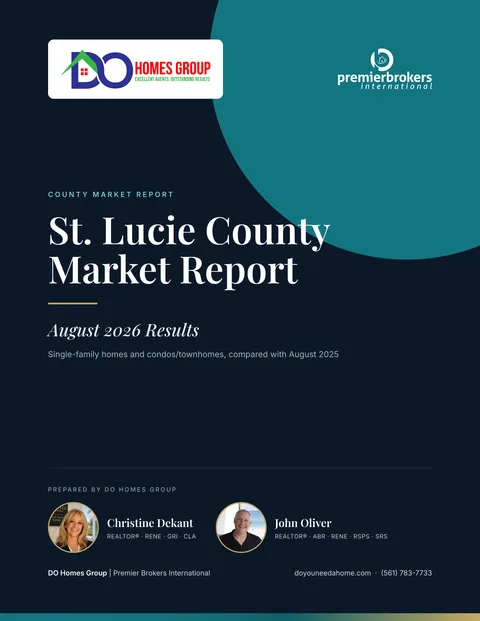
Free — August 2026 St. Lucie County Numbers
Houses Are Tight Here. Condo Buyers Still Have Choice.
In August 2026, houses sold at 95.5% of asking in 54 days, so there was less room than most buyers expect. Condos ran 7.6 months of supply and 82 days, which is a different negotiation entirely. Both sets of numbers, in one free PDF.
Established and Central: St. Lucie West
Near Clover Park — spring-training home of the New York Mets and regular-season home of the St. Lucie Mets — with the densest retail and dining, schools, medical services, golf communities and convenient I-95 access. The most convenient part of the city for day-to-day life.
Housing covers single-family neighborhoods, gated and golf communities, condominiums and townhomes, villas, age-qualified communities, and homes both with and without associations.
Objective characteristics: mostly 1990s to 2000s construction, established landscaping, wide range of property types including 55+ sections, HOA varies, no CDD in much of it, and the closest thing to "already finished" in Port St. Lucie.
Trade-offs: much of it was developed before the newest sections of Tradition, though construction dates vary by community. That means roof age, air-conditioning age, electrical and plumbing systems, windows and storm protection, association fees and reserves, insurance availability, and any recent or pending assessments all matter more than they would on newer stock.
The advantage of an established area is that the surrounding commercial development is already visible — what you see is what you get. Even so, check current development plans for any nearby vacant or underused parcels.
Upscale Gated: Tesoro and The Reserve
The higher-end gated golf communities, for buyers wanting luxury within Port St. Lucie's pricing rather than Martin County's.
Objective characteristics: highest price tier in the city, gated, golf, larger lots, substantial HOA and in places club structure.
Trade-offs: limited inventory relative to the rest of the city. Confirm club obligations in writing.
Riverfront and Nature: The North Fork Areas
Homes near the St. Lucie River and its North Fork, for water access and green surroundings.
Objective characteristics: varies widely by pocket, river and canal proximity, some with dock access, generally lower density, mixed build eras.
Trade-offs: verify the flood zone specifically — river proximity changes the insurance picture materially. Confirm what water access actually exists, since "near the river" and "on navigable water with a dock" are very different properties.
Maximum Value: The Broader Grid
The bulk of the city: an enormous grid of residential streets holding its most accessible pricing, new and resale alike. Expect older and newer single-family homes, non-HOA properties, larger suburban lots, homes with private pools, room for a boat or RV where permitted, and a mix of public utilities, wells and septic systems.
Objective characteristics: widest range of build eras, many with no HOA and no CDD, no amenity package, most attainable pricing in the area.
Trade-offs: no amenities and no community structure, and quality varies street to street. Two neighborhoods that look identical on a map can differ in utility arrangement, road access, property age and what is being built nearby. But for buyers who want a house and a yard without monthly obligations, this is where the value genuinely is — and the absence of a CDD can make a nominally pricier home cheaper monthly than a Tradition equivalent.
Age of the Housing Stock, by District
A useful shortcut, because build era drives insurance and maintenance more than location does here.
The eastern and central parts of the city — the older grid and much of St. Lucie West — carry housing from the 1970s through the 2000s. Roof age, AC age, and original windows are the things to price into an offer.
The western side, especially Tradition and its surrounding communities, is substantially newer, much of it built to post-2002 codes with impact glass and modern roofs. That generally quotes better on insurance, which is a real ongoing saving rather than a one-time one.
Neither is automatically better. Older stock often means bigger lots, no CDD, and mature landscaping. Newer means lower maintenance and better insurance but frequently a monthly assessment attached.
The CDD Question — Ask It Every Time
This matters more here than in most Florida markets, for reasons our cost of living guide sets out in full.
A Community Development District assessment finances a community's infrastructure and lands on your tax bill as a line item most buyers do not expect. It can run for decades and it transfers with the property.
For any property you are considering, get in writing the CDD amount, the remaining term, and the payoff figure if one exists. A lower-priced home with a large CDD can cost more monthly than a higher-priced home without one.
What Else to Verify
- FEMA flood zone for the specific address — this varies considerably across the city's canal and drainage network
- Roof age and wind-mitigation features, which swing insurance by thousands
- Property taxes recalculated for a new owner, not the seller's capped bill
- What is planned on nearby vacant parcels — in a city building this fast, that empty lot has a future
- HOA dues, master-association fees, and what they actually include
On Schools
Port St. Lucie is served by St. Lucie County Public Schools. Grades and boundaries are reviewed and updated annually, and assignments in a rapidly growing district can change as new schools open to keep pace with growth.
Verify current assignments directly with the district for the specific address rather than relying on a listing or an article, including this one.
Before You Commit
In a city this large, spend time in the district at the hour you'd actually be there, and drive your real commute. Communities here differ on objective characteristics — price tier, build era, property type, amenities, association and CDD structure, and location. The right one depends on your budget, your commute, and how much monthly obligation you want attached to the house.
Community Guide
Neighborhoods, schools, prices, and lifestyle — all in one place.
Port Saint Lucie Market Trends
Live data from the local MLS.
Thinking about Port St. Lucie?
We're local experts — let's find the right home for your move.
Homes for Sale in Port St. Lucie
Single-family homes $500k+, updated daily.
Free — August 2026 St. Lucie County Numbers
Houses Are Tight Here. Condo Buyers Still Have Choice.
In August 2026, houses sold at 95.5% of asking in 54 days, so there was less room than most buyers expect. Condos ran 7.6 months of supply and 82 days, which is a different negotiation entirely. Both sets of numbers, in one free PDF.
Free instant PDF · No obligation · See what's inside →
Frequently Asked Questions
What are the best neighborhoods in Port St. Lucie?
It depends what you're after. Tradition offers the newest construction and a walkable town center; PGA Village and The Legacy offer golf; St. Lucie West is established and central with the best retail access; Tesoro and The Reserve are the upscale gated options; the North Fork areas offer river proximity; and the broader city grid holds the most attainable housing, often with no HOA or CDD.
What is Tradition in Port St. Lucie?
The city's flagship master-planned community on the west side, built around a walkable town square with shops, restaurants, and a regular events calendar. The developer built the town center before selling homes, which is why it functions as an actual center. It's still actively building out, and much of it carries CDD assessments.
Do Port St. Lucie neighborhoods have CDD fees?
Many of the newer master-planned communities do, including much of Tradition. A CDD assessment appears on your annual tax bill separately from HOA dues, can run for decades, and transfers with the property. Always get the amount, remaining term, and payoff figure in writing — a cheaper home with a large CDD can cost more monthly than a pricier one without.
Are there neighborhoods in Port St. Lucie without an HOA?
Yes — much of the city's broader residential grid has no HOA and no CDD. There's no amenity package and quality varies street to street, but for buyers who want a house and yard without monthly obligations, that's where the genuine value is.
Which Port St. Lucie neighborhoods are near the water?
The areas around the St. Lucie River and its North Fork, though these vary widely by pocket. Verify the flood zone for the specific address, since river proximity changes the insurance picture materially, and confirm whether the property has actual navigable water access and a dock rather than just being near the river.
What school district is Port St. Lucie in?
St. Lucie County Public Schools. Grades and boundaries are reviewed annually, and in a fast-growing district assignments can change as new schools open. Verify current assignments directly with the district for the specific address.
Keep Reading
Communities below are grouped by objective characteristics — price range, property type, waterfront and golf access, HOA structure, lot size, and location. The best community depends on your individual goals, budget, lifestyle, and housing preferences. We encourage buyers to visit neighborhoods personally and independently verify any information important to their home search.
This article is provided by DO Homes Group at Premier Brokers International for informational purposes only and does not constitute legal, financial, tax, or investment advice. Market statistics, pricing, availability, HOA fees, and community details change frequently and may have changed since publication. School assignments, boundaries, and ratings may change — verify all school information directly with the appropriate school district, and consult official public safety resources for any crime data relevant to your search. Verify all details independently and consult the appropriate licensed professionals before making any real estate decision. DO Homes Group is committed to Equal Housing Opportunity and does not discriminate on the basis of race, color, religion, sex, handicap, familial status, or national origin.