
Juno Beach · Local Guide
A Local's Guide to Juno Beach, Florida
The pier, the parks, the dunes and the history: what to use, notice and check in Juno Beach, whether you live here or are thinking about it.
By Christine DekantUpdated

A dune crossover through sea grape to the beach in Juno Beach
Juno Beach is small, but not empty. In a town of about 2 square miles you'll find a county beach park with a 990-foot pier, a sea turtle hospital, a 569-acre natural area that runs from the ocean to the Intracoastal, a lake at the Town Center, and a self-guided historic tour.
This guide is about what to use, notice and check. For the bigger picture of the town, its history and its housing, read what it's really like living in Juno Beach.
In this guide
Get oriented in five places
Juno Beach Park and the pier
Juno Beach Park is a Palm Beach County park at 14775 U.S. Highway 1, open sunrise to sunset, with parking, restrooms, outdoor showers and a guarded stretch of beach. The 990-foot Juno Beach Pier is part of the park and is managed by Loggerhead Marinelife Center. See the planning panel below before you go.
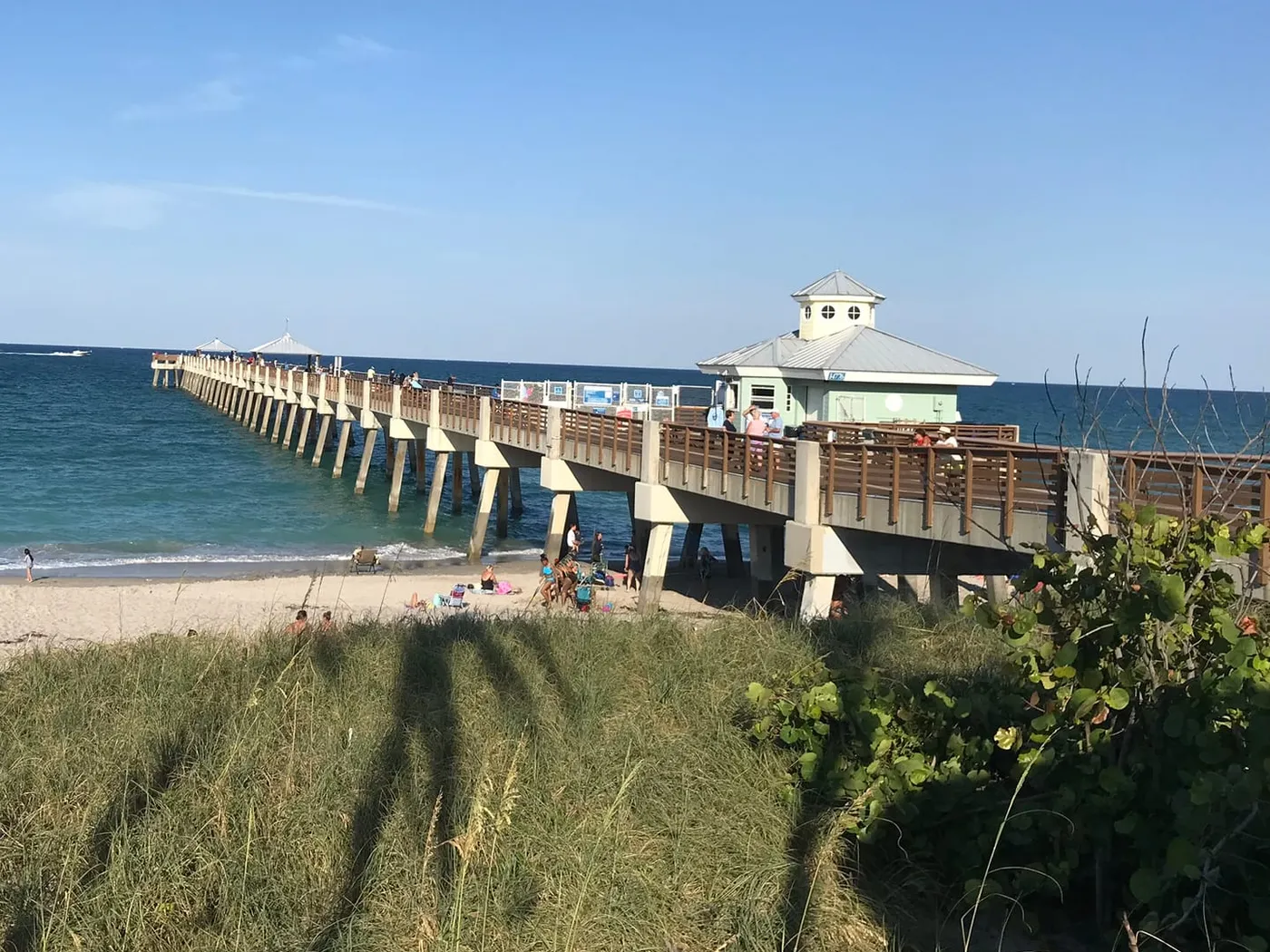
Loggerhead Marinelife Center
Loggerhead Marinelife Center is a nonprofit sea turtle research, rehabilitation, education and conservation center in Loggerhead Park, another county park. It runs a sea turtle hospital and offers tours and programs. Check Plan Your Visit for current hours, admission and what's on.
Juno Dunes Natural Area
The county's Juno Dunes Natural Area covers 569 acres and lets you travel from the Atlantic Ocean to the Intracoastal Waterway. It has two main parts:
- The oceanfront tract sits atop an ancient sand dune, with a view over the area.
- The west tract has several miles of trails: the paved Sawgrass Trail (0.21 miles), the sandy Scrub Oak Trail (1.8 miles, to the Intracoastal) and the sandy Scrub Hickory Trail (2.1 miles). There's also a boardwalk through a sawgrass wetland, an observation tower, and floating docks for boaters.
It's open sunrise to sunset, every day, for hiking and bird watching. Wear real shoes for the sandy trails, bring water, and stay on the marked paths.
The Town Center and Pelican Lake
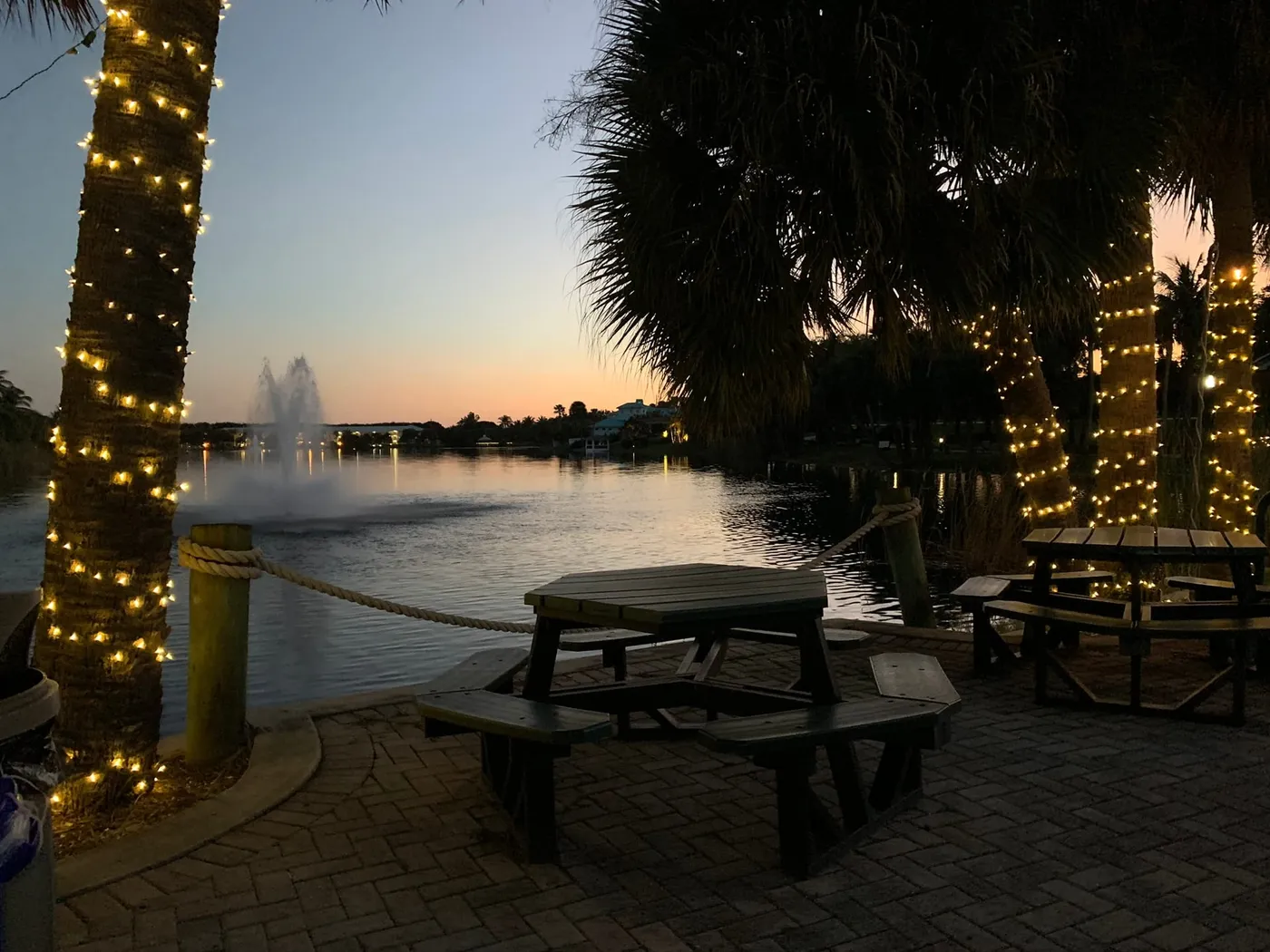
The Town Center sits on Pelican Lake, which the Town says was created as part of plans to dredge a marsh and develop the area as a tourist destination. The Town's history places the original fishing pier at the end of Mercury Road, today's Town Center.
Ocean Drive and the historic corridor
Ocean Drive (A1A) runs along the beach past homes and condominium buildings. It's also where much of the town's history played out. The motels, a tunnel, and the shift from motels to condominiums are all stops on the Town's tour, below.
Take the historic Juno loop
The Town of Juno Beach publishes a self-guided Discover Juno Beach tour, with interpretive plaques around town, a printable map and an audio version on a mobile app. A few of the stops:
- The Juno Beach Camp historic site. In 1933 Oscar and Hulda Erikson opened rustic cabins on the dunes overlooking the ocean, the Juno Beach Tourist Camp.
- The Motel Era: 1945–1970s, at Loggerhead Park. By the 1960s the town had as many as 17 oceanfront motels.
- The original Juno Beach Fishing Pier. The 500-foot pier was built at the end of Mercury Road, today's Town Center, in the 1940s. A storm destroyed it in 1984, and Palm Beach County opened a new Juno Beach Pier to take its place.
- Pelican Lake, with plaques at its north and south ends.
- From Motels to Condos, at the Greenbrier Condominium, the town's first condominium.
The tour also covers the Celestial Railroad, the 1889 rail line whose terminus gave Juno its name. Some stops are next to private property, so view them from public areas.
Turtle country: what residents and visitors should actually know
Sea turtle nesting season and turtle programs aren't the same thing. Loggerhead Marinelife Center monitors the beach for nesting from March through October, but walks, releases and other programs are scheduled separately, if at all, so check the center's calendar rather than assuming one is on.
On the beach, the Florida Fish and Wildlife Conservation Commission's guidance comes down to a few habits:
- Give wildlife space. Leave marked nests alone, and keep well back from nesting shorebirds; FWC suggests at least 300 feet.
- Fill in holes you dig before you leave.
- Take everything with you, including trash, toys and beach furniture, before sunset.
- Keep it dark at night. Avoid flashlights, phone lights and flash photography on the beach after dark.
- Report problems. For an injured, sick, dead or harassed sea turtle, or a disturbed nest, call FWC's Wildlife Alert line at 888-404-FWCC (3922).
A note for near-beach homeowners. The Town's Sea Turtle Protection Zone covers properties within 600 feet landward of the mean high-water line. Inside it, the Town requires a sea turtle lighting permit for new or replacement exterior lighting, and for windows and doors with a line of sight to the beach. Whether it applies depends on the address and the project, so check with the Town before you finalize plans.
The pier and beach: plan before you go
Pier access, fees, hours and construction all change. As of October 1, 2026, Loggerhead Marinelife Center's pier page lists separate spectator and fishing fees, hours that change by season, and a refurbishment that began June 1, 2026.
| What to check | Where |
|---|---|
| Whether the pier is open, and any construction closures | Juno Beach Pier (Loggerhead Marinelife Center) |
| Spectator and fishing fees, and current hours | Juno Beach Pier |
| Park hours, parking and lifeguarded areas | Juno Beach Park (Palm Beach County) |
| Surf, flags and conditions on the day | The posted flags and lifeguards at the beach |
The local rhythm without the clichés
- Seasons. Winter tends to bring part-time residents and more activity; summer brings heat, humidity and afternoon storms.
- Storms. Hurricane season runs June 1 through November 30. Know your evacuation zone before you need it.
- Beach conditions. Surf, currents and seaweed vary day to day. Check the flags, and remember that the seaweed, or wrack, is part of the beach's ecology; the Town explains its rules.
- Errands and evenings. Nearby Jupiter and Palm Beach Gardens add a much wider choice of dining, shopping and events. How long it takes to get there depends on where you live and when you go.
Before you make Juno Beach home
- Confirm public beach access and parking from the specific property, not just "near the beach."
- Get property-specific quotes for homeowners or condo unit-owner coverage, wind and flood; flood is usually a separate policy.
- Check whether the address is in the Sea Turtle Protection Zone and what lighting or window rules would apply to work you plan.
- For a condominium, review the documents, budget, reserves, inspections and the association's insurance.
- Look up the address's evacuation zone and emergency information.
This is a checklist, not legal, insurance or financial advice. Confirm each item with the right professional.
Settling in
Start with the five places above, walk the historic loop once, and learn the turtle habits before nesting season. For more, see the Juno Beach community guide, things to do in Juno Beach, hidden gems and Juno Beach neighborhoods.
Community Guide
Neighborhoods, schools, prices, and lifestyle — all in one place.
Juno Beach Market Trends
Live data from the local MLS.
Homes for Sale in Juno Beach
Single-family homes $500k+, updated daily.
Next step
Thinking about making Juno Beach home? Explore the community guide, or talk with our team about a specific property and the checks above.
Frequently Asked Questions
What is the Juno Beach Pier and how do I check current access?
It's a 990-foot pier at Juno Beach Park, a Palm Beach County park, managed by Loggerhead Marinelife Center. Access, fees, hours and construction change; a refurbishment began June 1, 2026. Check the center's Juno Beach Pier page before you go.
What is the Juno Dunes Natural Area?
A 569-acre county natural area in Juno Beach that runs from the Atlantic Ocean to the Intracoastal Waterway. The oceanfront tract sits atop an ancient dune, and the west tract has several miles of trails, a boardwalk through a sawgrass wetland, an observation tower and floating docks. It's open sunrise to sunset.
What are the sea-turtle etiquette rules in Juno Beach?
Leave marked nests alone and give wildlife space, fill in holes you dig, take trash, toys and beach furniture with you before sunset, and avoid flashlights, phone lights and flash photography on the beach after dark. Report an injured, dead or harassed sea turtle, or a disturbed nest, to FWC's Wildlife Alert line at 888-404-FWCC (3922).
Is there a self-guided historic tour in Juno Beach?
Yes. The Town of Juno Beach publishes the Discover Juno Beach tour, with interpretive plaques, a printable map and an audio version on a mobile app. Stops include the Juno Beach Camp historic site, the motel era, the original fishing pier, Pelican Lake and the shift from motels to condominiums.
What should a near-beach homeowner verify before exterior work?
Whether the property is in the Town's Sea Turtle Protection Zone, which covers properties within 600 feet landward of the mean high-water line. Inside it, new or replacement exterior lighting, and windows and doors with a line of sight to the beach, need a Town sea turtle lighting permit. Check with the Town before you finalize plans.
Keep Reading
This article is provided by DO Homes Group at Premier Brokers International for informational purposes only and does not constitute legal, financial, tax, or investment advice. Market statistics, pricing, availability, HOA fees, and community details change frequently and may have changed since publication. School assignments, boundaries, and ratings may change — verify all school information directly with the appropriate school district, and consult official public safety resources for any crime data relevant to your search. Verify all details independently and consult the appropriate licensed professionals before making any real estate decision. DO Homes Group is committed to Equal Housing Opportunity and does not discriminate on the basis of race, color, religion, sex, handicap, familial status, or national origin.