

Juno Beach · Local Guide
What It's Really Like Living in Juno Beach, Florida
A small beach town with a big conservation identity, and a history of railroads, motels and condominiums that still shapes its streets and buildings.
By John OliverUpdated
The Juno Beach Pier, from the dune beside it
Juno Beach is small. The 2020 Census counted 3,858 residents on about 2 square miles of land, on the barrier island between the Atlantic and the Intracoastal. It's a beach-first town with a long history and a strong conservation identity, and it's home to Loggerhead Marinelife Center.
What it isn't is frozen in time, or uniformly low-rise. Its mix of single-family streets, condominium buildings of different ages and heights, dunes and natural areas came from several distinct development eras. Knowing that history explains a lot about what you'll see, and what you'll need to check, when you look at a home here.
In this guide
How Juno Beach got its name, and its shape
The Town of Juno Beach tells the story in its short history and its Discover Juno Beach tour. The milestones:
| When | What happened | Why it matters today |
|---|---|---|
| 1889 | The Jupiter and Lake Worth Railway, later nicknamed the "Celestial Railroad," laid 7½ miles of track. Its terminus, at the head of Lake Worth, was named Juno, after the wife of the Roman god Jupiter. | The name came from that rail terminus, which isn't the same place as today's town. The "celestial" theme lives on in street names such as Mars, Venus and Olympus. |
| 1898 | The final dredging of the Intracoastal Waterway made the area a barrier island. | The town sits between the ocean and the Intracoastal, which shapes access, views and coastal risk. |
| 1933 | Oscar and Hulda Erikson opened the Juno Beach Tourist Camp, rustic cabins on the dunes. | The town began as a place for beach visitors. |
| 1953 | About 130 year-round residents, mostly motel owners, incorporated the town, aiming to put its name on the map. | Tourism, not commuting or retirement, founded the town. |
| 1960s | As many as 17 oceanfront motels operated. The Town annexed property to the north and zoned it more liberally, with hotels in mind. The first condominium, The Greenbrier, arrived in 1966. | The northern annexation and its zoning set up a different building scale from the original town. |
| 1972 | The Tower became the first 12-story condominium. The population had tripled from 249 to 747 between 1960 and 1970. | Taller condominium buildings are part of Juno Beach, not an exception to it. |
| Late 1970s–1993 | Rising land values and property taxes squeezed the largely one-story oceanfront motels; the last one was sold to developers in 1993. | The oceanfront's mix of building ages and heights reflects that turnover. |
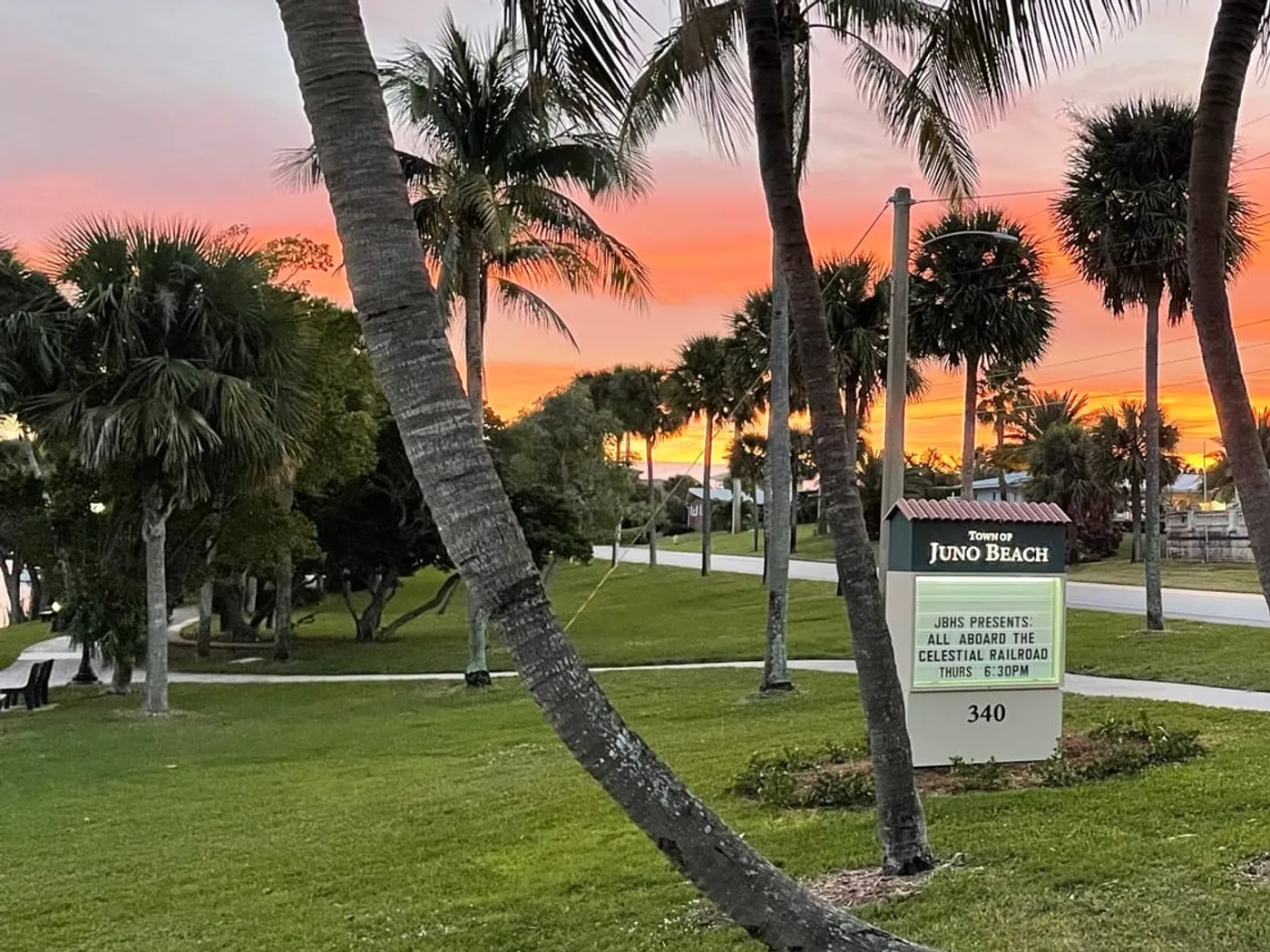
The town is quieter than its history suggests
The motel strip is gone, and what replaced it is mostly residential. Day to day, what you'll find is:
- A mix of housing. Single-family streets, older condominium buildings, and taller condominium buildings, rather than one uniform type.
- A small commercial footprint. Many residents shop, run errands and go out to eat in neighboring communities. How that feels depends on where you live, the time of day and the season, so try the routes you'd actually drive.
- Public beach and natural areas. Palm Beach County runs Juno Beach Park, home of the pier, and Loggerhead Park, where Loggerhead Marinelife Center sits. The Town also features Juno Dunes Natural Area.
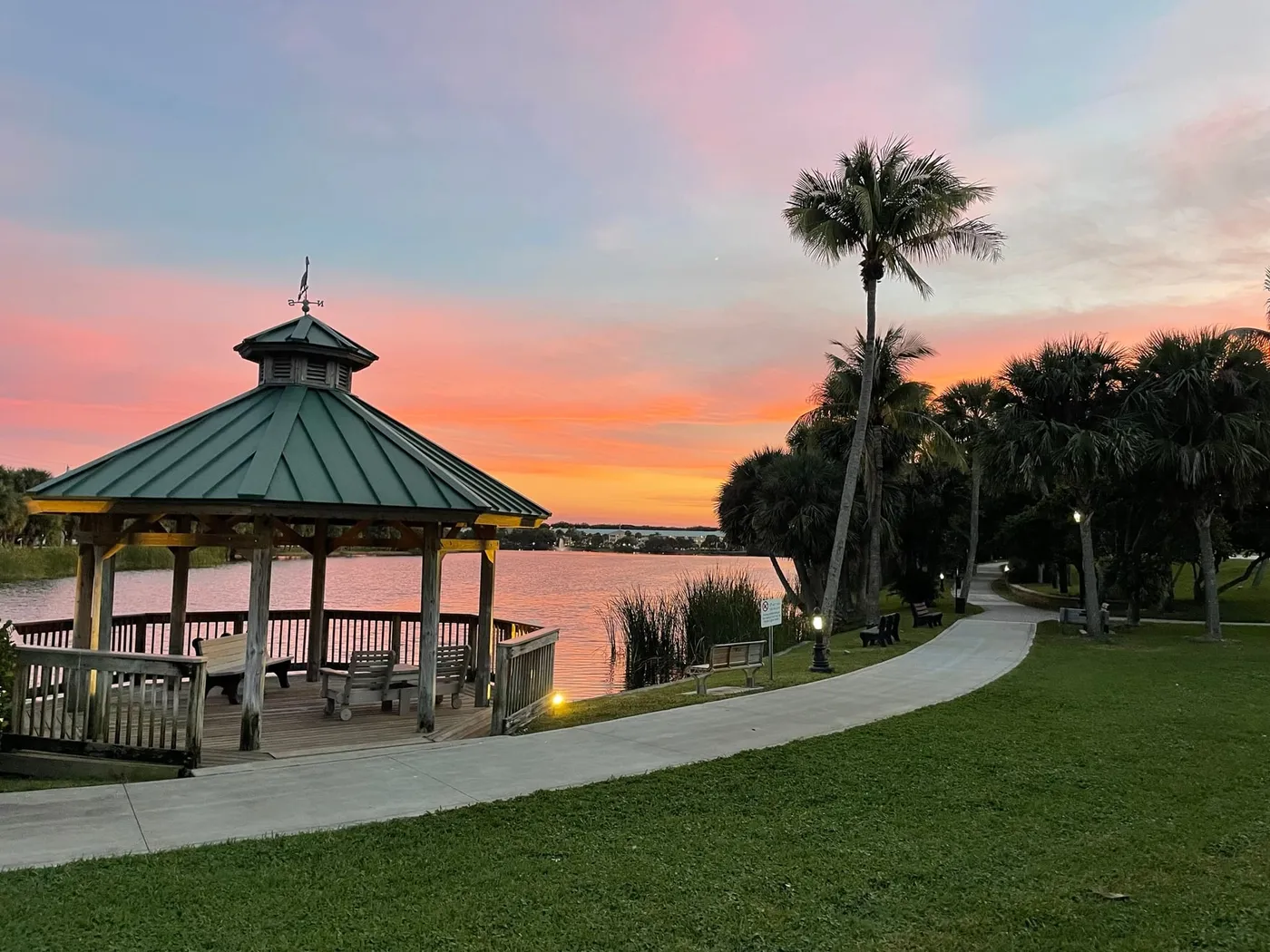
Quiet is the right word for much of the town, but it isn't the same for everyone. The beach near the pier can be busy on a nice weekend, and the streets near the main roads see more traffic than the side streets.
Conservation is part of the ownership experience
Loggerhead Marinelife Center is a nonprofit sea turtle research, rehabilitation, education and conservation center. Its research program traces back to founder Eleanor Fletcher's state permit in 1969; the organization itself was incorporated in 1983. The center monitors an 8.5-mile stretch of beach from March through October and describes it as the Western Hemisphere's most densely nested beach for the loggerhead. Check its site for current hours, tours and programs; don't plan around a particular release or walk until it's announced.
For owners, conservation is more than something to visit:
- Turtle lighting. The Town's Sea Turtle Protection Zone covers properties within 600 feet landward of the mean high-water line. Inside it, the Town requires a sea turtle lighting permit for work such as new or replacement exterior lighting, and for windows and doors with a line of sight to the beach. Whether and how it applies depends on the property and the project, so treat it as a due-diligence question, not a blanket rule.
- Seaweed. The Town explains that the seaweed, or wrack, left by high tide feeds migratory birds. Hand raking needs a no-fee Town permit, seaweed can't be removed from the beach, and no permits are issued during nesting season, March 1 to October 31. Mechanical raking of the county's guarded beaches is rare in nesting season.
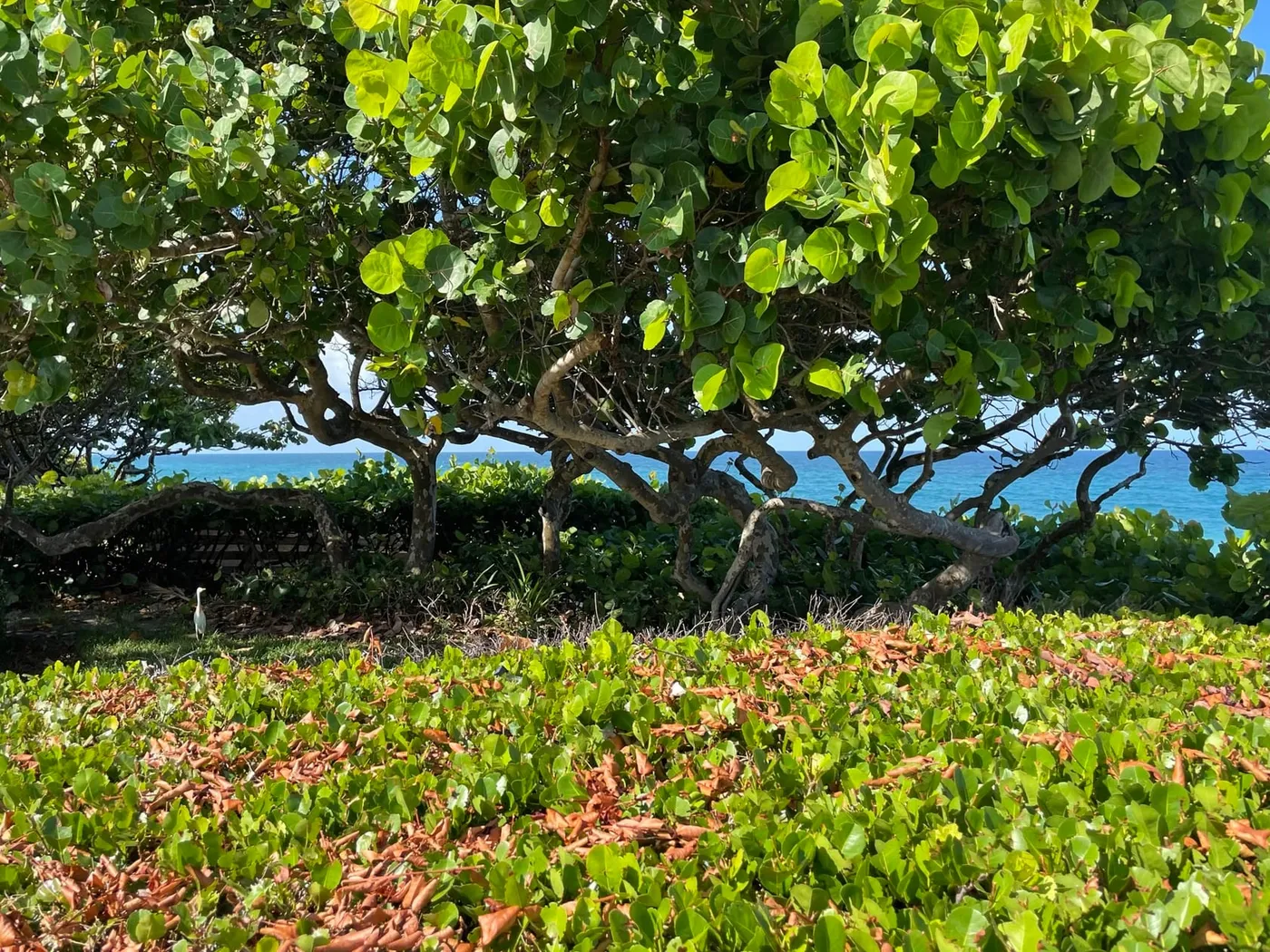
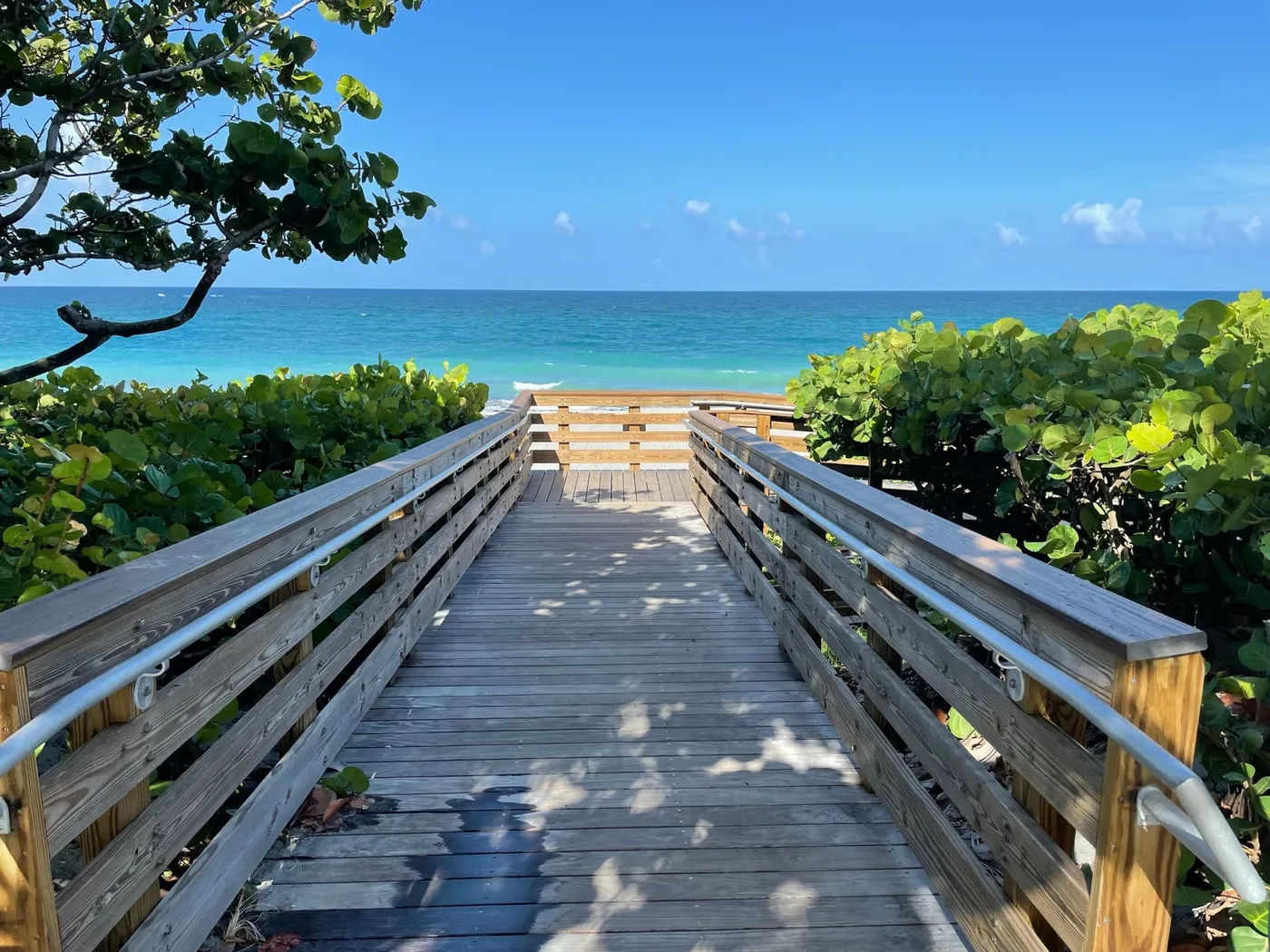
- Dunes. Use the beach crossovers rather than cutting through the dune and its vegetation.
What the housing actually looks like
| Home type | What to expect | What to verify |
|---|---|---|
| Single-family homes | Houses on residential streets, including streets with celestial names. | Flood zone, elevation, roof and windows, insurance quotes, and the lighting zone if the house is near the beach. |
| Established condominium buildings | Condominiums have been part of the town since The Greenbrier in 1966, so buildings span several decades. | Building age, maintenance history, budget and reserves, inspections, rules, and the association's insurance. |
| Taller condominium buildings | The Tower was the first 12-story condominium, in 1972, after the Town annexed land to the north with more liberal zoning. | The same as any condominium, plus the building's specific inspection and reserve requirements. |
| Near-beach ownership | Homes and condos near the ocean, some within the Sea Turtle Protection Zone. | Lighting-zone status, wind and flood exposure, beach access and parking, and evacuation zone. |
We don't publish price ranges or investment returns here. Ask for current, property-specific numbers, and see our neighborhood guide for more on the areas.
A realistic week in Juno Beach
- The beach. Public access depends on where you live. Juno Beach Park is open sunrise to sunset. Check the posted rules and lifeguard information where you swim.
- The pier. The 990-foot Juno Beach Pier is a county facility managed by Loggerhead Marinelife Center; the admission fee includes a fishing license for fishing from the pier. A refurbishment began on June 1, 2026, so check the pier's page for current status and any closures.
- Errands and dining. Expect to drive to neighboring communities for most shopping and for a wider choice of restaurants. How long that takes depends on where you live and when you go.
- The seasons. Turtle nesting season runs March through October, and hurricane season runs June 1 through November 30. Visit in more than one season before you decide.
- The trade-off. You get small-town scale and beach access; variety is a short drive away rather than outside your door.
The due-diligence list before you buy
- Get property-specific quotes for homeowners or condo unit-owner (HO-6) coverage, wind and flood before you commit.
- Remember that flood damage isn't covered by a homeowners policy; flood insurance is usually a separate policy, through the NFIP or a private carrier. See the state's homeowners insurance overview.
- Check the property's FEMA flood zone and the Town's flood hazard information.
- Ask whether the property is in the Sea Turtle Protection Zone and what lighting or window rules would apply to work you plan.
- For a condominium: request the documents, budget, reserves, recent inspections and the association's insurance. The association's master policy and your unit-owner policy cover different things; find out where one ends and the other begins.
- Review the building's age and maintenance history.
- Confirm beach access and parking from the specific address.
- Look up the address's evacuation zone and plan your route.
This is a checklist, not legal, insurance or financial advice. Confirm each item with the appropriate professional.
Who tends to like Juno Beach, and who should compare nearby areas
| Juno Beach | Jupiter | Palm Beach Gardens | |
|---|---|---|---|
| Scale | A small town: 3,858 residents in the 2020 Census | A much larger town | A much larger city |
| Home types | Single-family homes and condominium buildings of several eras and heights | A wide range of neighborhoods and home types | A wide range, including golf and club communities |
| Shopping and dining | Limited in town; most is in neighboring communities | More within the town itself | Major retail, including The Gardens Mall |
| Pace | Quieter and beach-focused | Busier, with more going on | Busier, suburban and commercial |
Juno Beach tends to suit you if you want quiet beach access, a small-town scale and a conservation-minded community, and you're happy to drive for variety.
Compare nearby areas if you want more restaurants, shopping and activity close to home, or a wider choice of neighborhoods. Neither choice is better; they're different. Our Juno Beach vs nearby cities guide goes further.
The bottom line
Juno Beach is a small town with a big history: a railroad that gave it its name, motels that founded it, and condominiums that reshaped its oceanfront. Today it's quiet, beach-oriented and serious about its sea turtles. Whether that suits you comes down to how you want to spend an ordinary week, and the property-specific checks above.
For more, see the Juno Beach community guide, our local's guide, things to do and who Juno Beach suits.
Community Guide
Neighborhoods, schools, prices, and lifestyle — all in one place.
Juno Beach Market Trends
Live data from the local MLS.
Homes for Sale in Juno Beach
Single-family homes $500k+, updated daily.
Next step
Weighing a specific Juno Beach home or condo? Start with the community guide, or talk with our team about the property and the questions above.
Frequently Asked Questions
What is Juno Beach known for?
Its beach and its sea turtles. It's home to Loggerhead Marinelife Center, a nonprofit sea turtle research, rehabilitation, education and conservation center, and to the 990-foot Juno Beach Pier, a county facility the center manages. It's also a small town, with 3,858 residents in the 2020 Census.
How did Juno Beach get its name?
From the Jupiter and Lake Worth Railway, later nicknamed the "Celestial Railroad," which laid 7½ miles of track in 1889. Its terminus at the head of Lake Worth was named Juno, after the wife of the Roman god Jupiter. That terminus isn't the same place as today's town, which incorporated in 1953.
What types of homes are in Juno Beach?
Single-family homes on residential streets, established condominium buildings dating back to The Greenbrier in 1966, and taller condominium buildings, starting with The Tower, the first 12-story condominium, in 1972.
What should ocean-adjacent buyers verify?
Property-specific insurance quotes for wind and flood, with flood as a separate policy; the FEMA flood zone; whether the property is in the Town's Sea Turtle Protection Zone and what lighting rules apply; condominium documents, reserves and insurance where applicable; beach access and parking; building age and maintenance; and the address's evacuation zone.
Is Juno Beach a good fit for someone who wants quiet beach access?
It often is. The town is small and beach-focused, with public beach access at county parks. The trade-off is that most shopping, errands and restaurant choice are in neighboring communities, so it suits people who are happy to drive for variety.
Keep Reading
This article is provided by DO Homes Group at Premier Brokers International for informational purposes only and does not constitute legal, financial, tax, or investment advice. Market statistics, pricing, availability, HOA fees, and community details change frequently and may have changed since publication. School assignments, boundaries, and ratings may change — verify all school information directly with the appropriate school district, and consult official public safety resources for any crime data relevant to your search. Verify all details independently and consult the appropriate licensed professionals before making any real estate decision. DO Homes Group is committed to Equal Housing Opportunity and does not discriminate on the basis of race, color, religion, sex, handicap, familial status, or national origin.