
 Photo by John Oliver
Hidden Gems in Lake Worth Beach, Florida: Local History and Lower-Profile Places
Photographed during the annual Lake Worth Beach Street Painting Festival, a February weekend event, not an everyday street scene.
"Hidden gems" is a loose phrase, so here's what this guide means by it: lower-profile public places, historic buildings you can appreciate from the sidewalk, and local history that explains why the city looks the way it does. None of it is secret, and all of it is public or viewable from a public right-of-way.
The big-ticket activities, meaning the beach, pier, Snook Islands, murals and golf, are in our things to do guide. Much of the history below comes from the City of Lake Worth Beach's own historic-site records. Programming, hours and events change, so check the official source before you go.
The Casino Building's longer story
What it is: the City's beach complex at 10 South Ocean Boulevard.
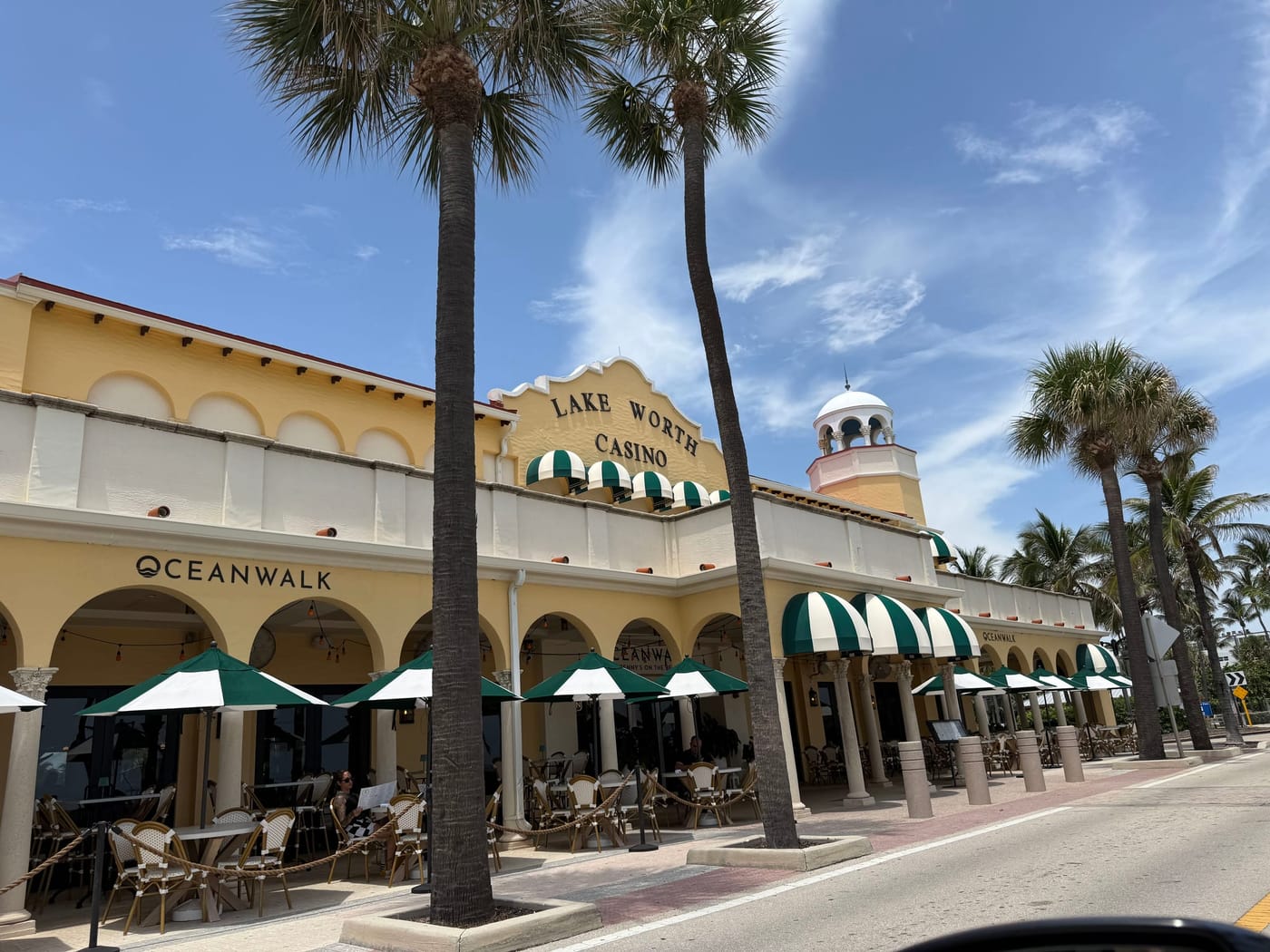
Why it's distinctive: the City's historic-site records say it opened in 1922 as the "Lake Worth Casino and Baths," with a saltwater pool, a tunnel under Ocean Boulevard to the beach, and an upstairs ballroom. The same records say it may have housed slot machines in the 1920s, and that it was damaged in the 1928 hurricane and remodeled. The building you see today is a rebuild that opened on March 1, 2013. The City says it stays true to the original 1920s architecture, and it kept the name "Casino" as a reminder of the building's history, with no gambling today.
Practical context: it's open to the public, with shops and restaurants on the ground floor, and the second-floor ballroom is rented for events. See the City's beach and pier page.
The Playhouse building
What it is: the Lake Worth Playhouse at 713 Lake Avenue.
Why it's distinctive: according to the City's historic-site records, it was built in 1924 as the Oakley Theatre in an elaborate Mediterranean style. It was substantially damaged in the 1928 hurricane and rebuilt in Art Deco style, changed hands several times, and was bought by the Lake Worth Playhouse in 1975.
Practical context: programming, dates and prices change. Check the Playhouse's own site for what's currently on.
Free — August 2026 Palm Beach County Numbers
What Palm Beach County Homes Actually Sold For
In August 2026, the typical house sold for $650,000 and went under contract in 40 days, at 94.8% of asking. Condos are a different market: 6.7 months of supply and 69 days. See both, and what each means for your offer or your asking price.
A downtown architecture walk, from the sidewalk
Several downtown buildings are listed in the City's historic-site records. All of these can be seen from public sidewalks:
- 601 Lake Avenue: built in 1939 in Art Moderne style as the Lake movie theatre. Today it's the Robert M. Montgomery, Jr. Building, headquarters and gallery of the Cultural Council for Palm Beach County.
- 609 Lake Avenue: identified by the City as the oldest downtown business building, from 1913.
- 414 Lake Avenue: built as a school in 1914, repurposed as City Hall in 1925, redesigned after hurricane damage in 1929, and converted to the City Hall Annex in 1972.
- 7 North Dixie Highway: today's City Hall, built in 1934 with federal Depression-era relief funds as a community auditorium, and reconfigured as City offices in 1973.
- 15 North M Street: the City library, built in 1940 with community funds and including an art gallery.
- 1 Lake Avenue: the Gulfstream Hotel. The City's records say it was built in 1924 with support from community stock sales and provided an officers' club during World War II. The City's resource page says it opened in 1925 and describes it as long vacant, so view it from the street.
The history museum
The City's historic-site records say a museum was added to the City Hall Annex at 414 Lake Avenue in 1982. Hours are limited and can change, so call the City Hall Annex at 561-480-2283 before you go.
The Community of Jewell mural
What it is: a mural at 1050 South Lakeside Drive.
Why it's distinctive: the City's historic-site records say it commemorates Samuel and Fannie James, African American homesteaders who settled here in 1885 and were leading citizens of Jewell, the community that predates Lake Worth. Fannie James served as postmaster in 1889. It's a reminder that the city's history begins before its 1912 platting.
Practical context: view it from the public right-of-way.
The Wingfield Wall of Unity
What it is: a mural wall in the 1400 block of Wingfield Street.
Why it's distinctive: according to the City's historic-site records, the wall was built in 1954 to separate a white neighborhood from a Black one, the Osborne community. In 1994 its first mural was dedicated as the "Wall of Unity," and in 2021 it was renewed with local history, a family tree and community leaders. The same records list the nearby Osborne School, built in 1948 as the city's first elementary school for the African American community and closed in 1971 when schools were integrated.
Practical context: this is a place of local history and memory in a residential area. View it respectfully from the street.
The Finnish connection
What it is: a thread of local history that still shows up in public places.
Why it's distinctive: WLRN reported in 2023 that Finnish immigrants came to the area in the early 1900s, including carpenters, cooks and domestic workers who came south with the families building Palm Beach and West Palm Beach. It reported that the Midnight Sun Festival was founded about four decades earlier by former mayor David Hinsa, and that Bryant Park holds two Finnish stone monuments donated in the mid-1980s.
Practical context: the stones in Bryant Park are in a public City park. If you're interested in the festival, look for current dates rather than assuming it runs every year.
Residential architecture, respectfully
The City's six historic districts hold houses built from the 1910s through the mid-twentieth century. The City's walking-tour data for College Park labels examples of Mediterranean Revival, Mission and Mid-Century Modern styles. Two private homes appear in the City's historic-site records:
- 1 5th Avenue South: built in 1923 as "Casa Florencia," designed by Lake Worth architect G. Sherman Childs in a Mediterranean style, and known locally as the Birthday Cake House.
- 109 South N Street: the Post Rooming House, built in 1912 and described by the City as one of Lake Worth's oldest houses, used as a boarding house into the 1940s.
These are private residences. Admire them from the public sidewalk, and don't enter the property. The City's historic districts page has the districts and their histories.
First light at Snook Islands
What it is: Palm Beach County's restored lagoon habitat at 100 North Golfview Road, with a boardwalk, a kayak launch and a fishing pier.
Why it's distinctive: it's a restoration project, with mangrove islands and oyster reefs rebuilt in the lagoon next to downtown. The County says it's open sunrise to sunset, so early morning is an easy time to go. The County lists species visitors may see, but sightings aren't guaranteed.
Practical context: site parking is limited, and the County points visitors to Bryant Park. See the County's Snook Islands page.
A smaller City series: Bonfires & Night Market
The City's Special Events page lists a winter Bonfires & Night Market series, with live music and handmade goods from local artisans. Dates are set each season, so check the City's events calendar or Special Events page.
Explore thoughtfully
- Check the official source first for hours, programming and event dates.
- Respect public and private boundaries. Look at historic homes from the sidewalk, and stay out of private property and service areas.
- Go at different times. A place can feel different on a weekday morning, a weekend evening, or in summer versus winter.
- Pair this guide with the things to do guide, the dining guide and the local guide.
If you're considering a move, this kind of exploring is a good test of whether the city's history and texture appeal to you day to day. Read what it's really like living in Lake Worth Beach and browse current listings on the Lake Worth Beach community page.
Community Guide
Neighborhoods, schools, prices, and lifestyle — all in one place.
Lake Worth Market Trends
Live data from the local MLS.
Homes for Sale in Lake Worth Beach
Single-family homes $500k+, updated daily.
Free — August 2026 Palm Beach County Numbers
What Palm Beach County Homes Actually Sold For
In August 2026, the typical house sold for $650,000 and went under contract in 40 days, at 94.8% of asking. Condos are a different market: 6.7 months of supply and 69 days. See both, and what each means for your offer or your asking price.
Free instant PDF · No obligation · See what's inside →
Frequently Asked Questions
What is the history of the Lake Worth Beach Casino?
The City's historic-site records say it opened in 1922 as the "Lake Worth Casino and Baths," with a saltwater pool, a tunnel under Ocean Boulevard and an upstairs ballroom, and was damaged in the 1928 hurricane and remodeled. The current rebuilt building opened on March 1, 2013. There is no gambling; the City kept the name for its history.
When was the Lake Worth Playhouse built?
According to the City's historic-site records, it was built in 1924 as the Oakley Theatre, rebuilt in Art Deco style after the 1928 hurricane, and bought by the Lake Worth Playhouse in 1975. Check the Playhouse's website for current programming.
Is there a history museum in Lake Worth Beach?
The City's historic-site records say a museum was added to the City Hall Annex at 414 Lake Avenue in 1982. Hours are limited and can change, so call the City Hall Annex at 561-480-2283 before visiting.
What is the Wingfield Wall of Unity?
A mural wall in the 1400 block of Wingfield Street. The City's records say it was built in 1954 to separate a white neighborhood from the Black Osborne community, dedicated as the "Wall of Unity" with its first mural in 1994, and renewed in 2021 with local history and community leaders.
What is Lake Worth Beach's Finnish connection?
WLRN reported in 2023 that Finnish immigrants came to the area in the early 1900s, that the Midnight Sun Festival was founded by former mayor David Hinsa about four decades earlier, and that Bryant Park holds two Finnish stone monuments donated in the mid-1980s.
Where can I find current events in Lake Worth Beach?
Use the City's events calendar and Special Events page, which list seasonal City events such as the winter Bonfires & Night Market series, and check each venue's own website for its programming. Dates and schedules change each year.
Keep Reading
This article is provided by DO Homes Group at Premier Brokers International for informational purposes only and does not constitute legal, financial, tax, or investment advice. Market statistics, pricing, availability, HOA fees, and community details change frequently and may have changed since publication. School assignments, boundaries, and ratings may change — verify all school information directly with the appropriate school district, and consult official public safety resources for any crime data relevant to your search. Verify all details independently and consult the appropriate licensed professionals before making any real estate decision. DO Homes Group is committed to Equal Housing Opportunity and does not discriminate on the basis of race, color, religion, sex, handicap, familial status, or national origin.