
 Photo by FilterGrade / Unsplash
What It's Really Like Living in Port St. Lucie, Florida
Port St. Lucie is changing quickly, and that is the most important thing to understand before you buy here.
The city has grown from a few hundred residents at incorporation in 1961 to more than 260,000 today. It covers roughly 120 square miles and is now the sixth-largest city in Florida by population.
The old description still holds on the surface: sprawling and suburban, with newer homes, master-planned communities, parks, and housing that gives you meaningfully more space than Palm Beach County or Martin County. What has changed is that the amenities are finally catching up to the rooftops, and several are arriving at once.
For some buyers that continued growth is the appeal. For others, the construction, the traffic and the half-finished feel are the drawback.
Here is what living in Port St. Lucie is really like.
Port St. Lucie Is Still Growing
Decades of rapid population growth have not stopped, and development continues across the city. New residential communities are expanding in the western and southern sections in particular, and commercial development is following as retailers, restaurants, healthcare providers and employers respond to the population.
For most of that run the criticism was fair: a lot of houses, not much else. Residents drove to Stuart or Palm Beach County for anything interesting. That is actively changing.
The city publishes information on proposed and approved projects, but plans and construction schedules move. Verify the current status of anything near a property you are considering rather than relying on an early announcement, a conceptual rendering, or any article — including this one.
Anyone buying in a growing area should investigate:
- Approved development on nearby land
- Planned roads and road improvements
- Future schools and public facilities
- Commercial and industrial land uses
- Construction timelines
- Traffic studies and access points
- Undeveloped parcels surrounding the property
A quiet view today does not guarantee the adjoining land stays vacant.
The Value Proposition Is Still the Headline
None of the growth changes the core reason people come. Port St. Lucie is where a lot of buyers land when they want a newer home, room to breathe, and a price that beats the markets to the south.
For buyers priced out of Palm Beach County — and a large share of the city's in-migration is exactly that — the trade is often moving up an entire housing category at a similar monthly payment. That, more than any single project, is still the headline. The full cost picture, including taxes and insurance, is in our cost of living guide.
Amenities Are Beginning to Catch Up With the Population
The longstanding criticism of Port St. Lucie was that housing arrived faster than the restaurants, entertainment and gathering places. Several projects are now aimed squarely at that gap.
The Port District
A developing waterfront destination along roughly 1.5 miles of the North Fork of the St. Lucie River, taking in Pioneer Park, an event lawn, an overwater stage, a boardwalk, conservation land and kayak access. The intent is a central riverfront gathering place, which the city has never really had.
The Grove
A dining and entertainment development inside the Port District. The first phase is expected to bring three dining venues and two bars, with the city currently anticipating an early 2027 opening; a later phase adds more casual options. Construction schedules on projects this size move, so treat the date as a target.
It matters because Port St. Lucie has never had a waterfront dining district, despite the river running through it. More on where people actually eat now is in our eating and drinking guide.
Walton and One, and Professional Soccer
Walton and One is a planned mixed-use redevelopment on US-1. The city and the United Soccer League have announced professional men's and women's teams tied to a new stadium within the development, intended to anchor a wider entertainment and cultural district — in a city whose sports calendar has been six weeks of spring training. Planning, approvals and construction are all still underway, so opening dates and final details are subject to change. Our things to do guide covers the rest.
Continued Development Around Tradition
Tradition and Southern Grove keep adding housing, businesses, medical facilities, employment space, restaurants and retail. Southern Grove's master plan sets aside land for manufacturing, commercial development and other employment uses, and a 110-acre regional park is planned for the growing Tradition area.
A Buc-ee's is also coming to St. Lucie County — the Texas travel-center chain whose stores function as genuine regional destinations rather than gas stations.
All of it may improve convenience and create new destinations. It also brings construction activity and more traffic to the neighborhoods next to it.
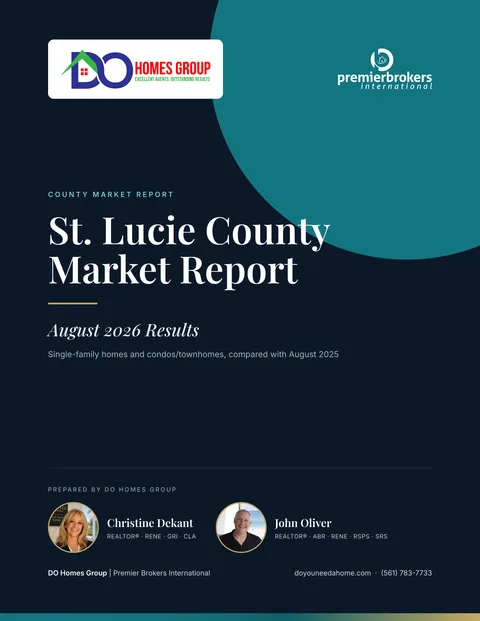
Free — August 2026 St. Lucie County Numbers
Houses Are Tight Here. Condo Buyers Still Have Choice.
In August 2026, houses sold at 95.5% of asking in 54 days, so there was less room than most buyers expect. Condos ran 7.6 months of supply and 82 days, which is a different negotiation entirely. Both sets of numbers, in one free PDF.
Housing Variety Is a Major Attraction
Port St. Lucie offers an unusually broad range of housing. Depending on the area you may find established non-HOA neighborhoods, new-construction communities, master-planned developments, gated and golf communities, age-qualified communities, townhomes and villas, waterfront properties, larger suburban lots, homes with private pools, and properties with room for boats or recreational vehicles where permitted.
The city's size means housing varies considerably from one section to another. An older home east of Florida's Turnpike may offer a larger lot and fewer restrictions. A newer home in Tradition or Riverland may offer current construction standards, amenities and an association-managed setting.
Neither is automatically better. Compare the property's age, condition, fees, location and ownership obligations. Our neighborhood guide breaks the sections down individually.
New Construction Is Widely Available
Port St. Lucie is one of the most active new-construction markets on the Treasure Coast. New homes appeal to buyers who want modern layouts, energy-efficient systems, current building standards and fewer immediate renovation needs.
New construction does not remove every concern, though. Before signing, establish what is actually included in the advertised price, whether lot premiums and structural upgrades are extra, what the association and community-development fees run, when amenities will be finished, what construction continues after move-in, who is responsible for roads and common areas, what warranties come with the home, what insurance actually quotes for the finished house, and what development is approved nearby.
A model home routinely contains upgrades that are not in the base price. Calculate from the contract and your selected options, not the model.
The Districts
Tradition
Tradition is the city's best-known master-planned community, and Tradition Square gives it shops, restaurants, events and public gathering space in a genuinely walkable center. It is notable because the developer built the town center and retail before selling homes — backwards from how Florida suburbs usually develop, and the reason it functions as a center rather than an afterthought.
The wider area is still building out, so expect continued construction, new commercial projects and shifting traffic. It is also worth separating living near Tradition Square from living elsewhere in the much larger Tradition area; walkability and access to shops vary a lot by neighborhood.
St. Lucie West
One of the city's more established commercial and residential districts, with restaurants, shopping, medical services, golf communities, schools and quick I-95 access.
Clover Park sits here and is the spring-training home of the New York Mets, as well as home to the St. Lucie Mets in the minor-league season, so there is baseball well beyond the six weeks of spring training. Convenient as the district is, the main roads get busy at peak commuting times, during spring training and through the seasonal population increase.
PGA Village
A prominent golf and residential area in western Port St. Lucie, with multiple courses laid out first and the residential communities built around them. Housing includes single-family homes, condominiums, villas and gated neighborhoods.
Do not assume every property carries the same golf access, membership arrangement or association obligation. Confirm whether golf membership is included, optional or separate; association and master-community fees; amenity access; rental restrictions; maintenance responsibilities; and membership dues and additional club charges. "PGA Village" describes a broad area rather than one uniform community.
The City Is Large and Spread Out
This is the adjustment nobody warns transplants about, and it changes ordinary life in ways square footage does not capture.
Two people can both live in Port St. Lucie and still be twenty or thirty minutes apart. Residents organize around individual districts — Tradition, St. Lucie West, Torino, Becker Road, Gatlin Boulevard, the eastern side — and there is no single traditional downtown serving as the center of daily life. Social life organizes around districts, schools and clubs rather than a center, because there isn't one.
That shapes how residents choose schools, medical providers, grocery stores, restaurants, recreation, social activities, highway access and commute routes. Evaluate a property by its relationship to the places you will actually use, not simply because it carries a Port St. Lucie address.
Most Residents Depend on a Car
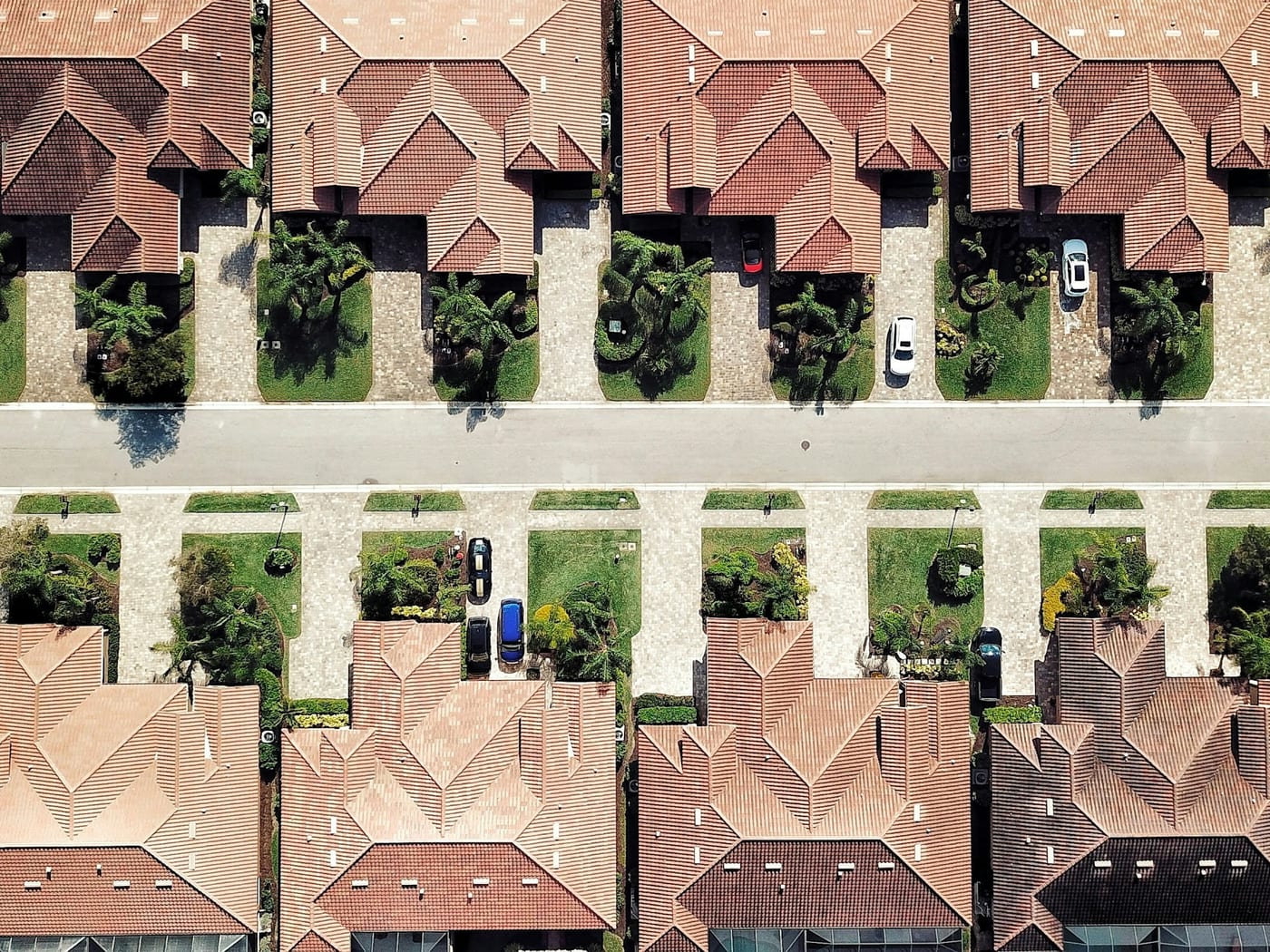
The city is primarily car-dependent. Some master-planned communities have sidewalks, trails and limited walkable commercial areas, but most residents need a vehicle for work, shopping, medical appointments and entertainment.
Traffic varies sharply by location and time of day. Port St. Lucie Boulevard, St. Lucie West Boulevard, Gatlin Boulevard, US-1 and Tradition Parkway all congest, and road improvements are ongoing as infrastructure tries to keep pace with the population. Drive the routes you will use, at the times you will use them, before you buy.
Port St. Lucie Is Not Directly on the Ocean
Despite being part of the Treasure Coast, the city has no Atlantic beach of its own. Residents drive east to Hutchinson Island, Fort Pierce, or nearby parts of St. Lucie and Martin counties. This surprises buyers who assumed "Treasure Coast" meant coastal.
Travel time depends heavily on where you start. Someone on the eastern side may have a far shorter beach drive than someone in western Port St. Lucie, so test the route from the specific neighborhood rather than trusting a citywide estimate.
Commuting South Requires Careful Planning
Plenty of buyers move here while continuing to work in Martin or Palm Beach County. The lower purchase price and additional space look attractive, but the commute can absorb a meaningful share of the savings once you count fuel, tolls, vehicle maintenance, insurance mileage, time away from home, seasonal traffic, construction delays and wear on the car.
Travel time varies significantly depending on whether the home sits near I-95, Florida's Turnpike, US-1 or an interior road. Test it on a normal weekday at your actual departure and return times. How the city compares with its neighbors on this is covered in our city comparison.
The River and Natural Areas Are Easy to Overlook
Port St. Lucie reads as a suburban city, but it also holds riverfront parks, preserves and natural areas. The North Fork of the St. Lucie River offers paddling, fishing and wildlife watching on water that is genuinely wild and permanently protected from development.
The Port District includes public riverfront access, the Oxbow Eco-Center protects 225 acres along the North Fork, and the Port St. Lucie Botanical Gardens occupies another 21 acres on the river. Together they are a different city from the residential and commercial corridors — see our hidden gems guide.
Growth Creates Opportunities and Trade-Offs
Buying into a growing city can mean getting ahead of amenities that do not exist yet. It can also mean living beside active construction, undeveloped parcels, new schools, road expansions, commercial projects, changing traffic patterns, and neighborhoods that will not feel finished for years.
Be careful about assuming planned development will lift a property's value. Future amenities may help, but appreciation is never guaranteed — projects get delayed, redesigned or cancelled, and nearby development affects different properties differently. Buy because the home and the community suit your needs now, not solely because of what may eventually be built. The wider ledger is in our pros and cons guide.
Insurance and Storm Preparation Still Matter
Newer construction may meet current building-code requirements and include modern wind protection, but no home should be assumed cheap or easy to insure on age alone.
Cost depends on roof type and age, construction materials, wind-mitigation features, opening protection, replacement cost, flood zone, prior claims, deductibles and the insurer's underwriting. Get property-specific homeowners and flood quotes during your inspection period.
Port St. Lucie sits inland from the ocean, but it is still South Florida and still exposed to hurricanes, wind and heavy rainfall.
Who May Enjoy Living in Port St. Lucie
The people happiest here wanted space, newness and value, and were willing to trade beach proximity and established character to get all three. Increasingly they also wanted to be early to a city visibly building toward something.
In practice it suits buyers who want a large selection of homes, new-construction options, master-planned communities, more indoor and outdoor space, suburban neighborhoods, golf and recreation, access to I-95 or Florida's Turnpike, a growing selection of restaurants and employment, and a city that is still developing. Its size also lets you choose among neighborhoods of very different ages, appearances and community structures.
Who Might Prefer Another Area
It suits you less if you want a traditional walkable downtown, immediate ocean access, an established historic neighborhood, extensive nightlife close to home, a short daily commute to Palm Beach County, a compact city where most destinations are nearby, or a community with little remaining construction.
Downtown Stuart, Fort Pierce, Jensen Beach and communities farther south offer different combinations of historic character, beach access, walkability and proximity to employment.
What to Verify Before Buying
- The complete cost of the home and any builder upgrades
- Association and community-development fees
- Current property-tax estimates
- Homeowners and flood-insurance costs
- School attendance boundaries, where relevant
- Internet and cellular service
- Commute times, driven at your real hours
- Beach access and travel time from that specific address
- Nearby zoning and approved development
- Road and infrastructure projects
- Utility providers and assessments
- Construction timelines for promised amenities
- Rental, parking and occupancy restrictions
In a city growing this fast, the surrounding area matters as much as the house.
The Bottom Line
For years the honest summary of Port St. Lucie was "great value, not much going on." The value part is still true. The second half is becoming less true every year, and the projects in the ground now are the reason.
It is also a large, car-dependent city still in the middle of significant development. For buyers who want space, newer housing and access to a growing community, that combination works. For buyers who prioritize beach proximity, historic character, walkability or a short commute south, the trade-offs land harder.
The most important decision is which part of Port St. Lucie you choose. Evaluate the individual neighborhood, the routes you will drive, the development approved nearby and the complete cost of ownership. A city covering roughly 120 square miles cannot be understood — or bought — as though every section offers the same life. Our community guide covers schools, prices and neighborhoods in one place.
Community Guide
Neighborhoods, schools, prices, and lifestyle — all in one place.
Port Saint Lucie Market Trends
Live data from the local MLS.
Thinking about Port St. Lucie?
We're local experts — let's find the right home for your move.
Homes for Sale in Port St. Lucie
Single-family homes $500k+, updated daily.
Free — August 2026 St. Lucie County Numbers
Houses Are Tight Here. Condo Buyers Still Have Choice.
In August 2026, houses sold at 95.5% of asking in 54 days, so there was less room than most buyers expect. Condos ran 7.6 months of supply and 82 days, which is a different negotiation entirely. Both sets of numbers, in one free PDF.
Free instant PDF · No obligation · See what's inside →
Frequently Asked Questions
What is Port St. Lucie known for?
Affordability and rapid growth. It's one of the largest and fastest-growing cities in Florida, known for new construction, master-planned communities like Tradition, PGA Village golf, New York Mets spring training at Clover Park, and the North Fork of the St. Lucie River aquatic preserve.
What new development is coming to Port St. Lucie?
Several major projects are in flight: The Grove, a riverfront dining and entertainment district in the Port District; a professional soccer stadium planned at Walton Road and US-1 anchoring a wider entertainment district; a Buc-ee's coming to St. Lucie County; and continued build-out at Tradition plus substantial new retail. Timelines on projects this size move — verify current status.
What does living in Port St. Lucie trade off?
It suits buyers who want more house for the money, newer construction, and a city on an upward trajectory, and who can accept car dependence, no beach frontage, and ongoing construction. It suits people less well if they want the coast, walkable historic character, or a short Palm Beach County commute.
Is Port St. Lucie on the beach?
No. The city is inland, with the coast at Fort Pierce or Hutchinson Island a 20–30 minute drive east. This regularly surprises buyers who assume the Treasure Coast location means beachfront.
How fast is Port St. Lucie growing?
Very fast. The city was incorporated on former ranch land in April 1961 with roughly 250 homes platted; the first census afterward, in 1970, counted 330 residents. It now reports more than 260,000 across about 120 square miles, which makes it the sixth-largest city in Florida and one of the fastest-growing large cities in American history by percentage. It has been functionally catching up with its own growth for two decades.
What are the downsides of living in Port St. Lucie?
It's spread out and car-dependent, it's not on the beach, the commute to Palm Beach County job centers is long, newer areas can feel repetitive, and constant construction and road work are part of daily life while the city builds out.
Keep Reading
This article is provided by DO Homes Group at Premier Brokers International for informational purposes only and does not constitute legal, financial, tax, or investment advice. Market statistics, pricing, availability, HOA fees, and community details change frequently and may have changed since publication. School assignments, boundaries, and ratings may change — verify all school information directly with the appropriate school district, and consult official public safety resources for any crime data relevant to your search. Verify all details independently and consult the appropriate licensed professionals before making any real estate decision. DO Homes Group is committed to Equal Housing Opportunity and does not discriminate on the basis of race, color, religion, sex, handicap, familial status, or national origin.