
Cost of Living in Stuart, Florida
Stuart's headline is that it costs less than the Palm Beach County coast, and that is broadly true. It is also incomplete, because the things that most affect your actual monthly number here do not show up in a price-per-square-foot comparison.
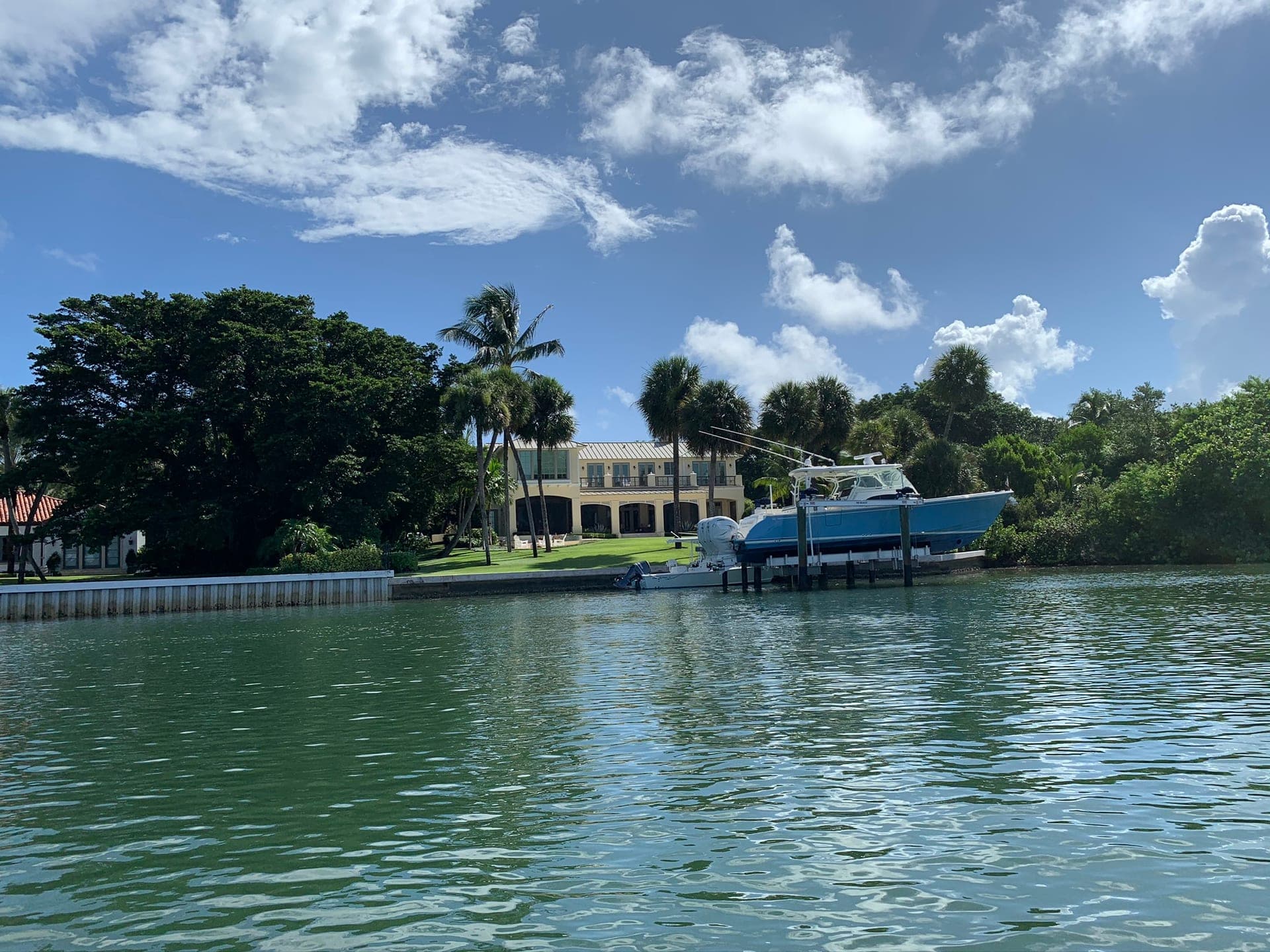
The cost of living in Stuart depends far more on which property you buy than on the town itself. An inland single-family home, a downtown condominium, a house with a private dock and an oceanfront place on Hutchinson Island can have completely different ownership costs even when their purchase prices are similar.
The expenses most likely to reshape the budget are property taxes after the purchase, homeowners and flood insurance, HOA or condominium fees, roof and building age, waterfront maintenance, commuting, utility efficiency and anything to do with a boat.
Prices move constantly. Use the market data on this page for where things stand today, and use the rest of this for the structure underneath it.
Stuart Is Not One Taxing Jurisdiction
Start here, because it catches people before anything else does. A Stuart mailing address does not establish that a property sits inside the incorporated City of Stuart.
The broader Stuart-area market takes in the City of Stuart, the Town of Sewall's Point, the Town of Ocean Breeze, unincorporated Martin County, the Hutchinson Island jurisdictions and several nearby communities that simply use a Stuart mailing address. Each parcel may carry a different combination of county taxes, school-board taxes, municipal taxes, special-district assessments, non-ad valorem charges and community redevelopment assessments.
Two homes a quarter-mile apart can therefore sit under different tax structures. Confirm the actual jurisdiction through Martin County property records rather than trusting the address on the listing.
The Tax Bill You Inherit Is Not the Tax Bill You Will Pay
The most common budgeting mistake in Florida, and it catches buyers in every county.
The seller's current bill may be far below what you will pay, usually because they have owned the home for years, held a homestead exemption, accumulated a Save Our Homes benefit, qualified for additional exemptions or ported a benefit in from a previous Florida homestead.
Florida's Save Our Homes limitation generally caps the annual increase in the assessed value of an existing homestead at the lower of 3% or the change in the Consumer Price Index. Note what it applies to: assessed value, not the amount of tax owed. Over a long ownership that opens a wide gap between market value, assessed value and taxable value — and that gap belongs to the qualifying owner's homestead benefit. It does not stay with the property for the next buyer.
After a change of ownership the property is generally reassessed for the next assessment year, unless a statutory exception applies. So do not assume your future assessed value will match the seller's assessed value, the seller's taxable value, the listing price, or even exactly your purchase price. The property appraiser determines just value using recognized valuation methods and available market data; your purchase price is important evidence, not an automatic answer.
What to do about it:
- Estimate from your own purchase price and current millage, never from the seller's tax bill or a listing's tax figure. Better still, use the Martin County Property Appraiser's tax estimator, and ask for a property-specific explanation when the projected bill materially affects whether you can afford the house.
- File for Homestead on a primary residence. The standard deadline is March 1 for the applicable tax year, and missing it costs a year of benefit.
- Ask about portability if you already hold a homesteaded Florida property.
- Check which jurisdiction you are in, per the section above.
Homestead Exemption
An owner who makes a Florida property their permanent residence may qualify. For 2026 in Martin County that means $25,000 off assessed value for all taxing authorities, plus an inflation-adjusted additional $26,411 on assessed value above $50,000 — a total of $51,411, though the additional portion does not apply to school taxes. That figure is indexed and moves, so check the current year rather than reusing an older number.
Qualifying for homestead also establishes eligibility for the Save Our Homes limitation in future years. It is not automatic, eligibility depends on ownership, residency and title, and filing does not guarantee approval. Apply directly through the Martin County Property Appraiser.
Save Our Homes Portability
A buyer who previously owned a Florida homestead may be able to transfer — "port" — some or all of the accumulated Save Our Homes assessment difference to a new Florida homestead, currently up to $500,000.
Two things people get wrong. The exemption itself does not transfer: you apply for homestead on the new residence and request portability separately, using form DR-501T alongside the homestead application. And the clock is tighter than it sounds — you generally have until January 1 three years after January 1 of the year you abandoned the prior homestead to establish the new one, with the application due by March 1 of the first qualifying year.
The calculation also differs depending on whether you are moving to a property of higher or lower just value. Get an estimate from the Property Appraiser rather than assuming a number.

Free — August 2026 Martin County Numbers
Martin County Houses Are Selling Three Weeks Faster
In August 2026, houses went under contract in 56 days, down from 77 a year ago, and what is for sale dropped by more than a fifth. The typical house sold for $656,900. Every number is Martin County — Stuart, Palm City, Hobe Sound and Port Salerno — not Palm Beach County.
Insurance: Three Separate Questions, Not One
On this coast, "insurance" is really three conversations, and buyers who treat it as a single number get surprised.
Wind and the Hurricane Deductible
Florida homeowners policies may carry a separate hurricane deductible, and unlike an ordinary fixed-dollar deductible it is often calculated as a percentage of the insured dwelling limit. Florida residential insurers are generally required to offer specified hurricane-deductible options, including percentage-based choices, though exceptions and policy-specific rules apply.
The arithmetic is worth doing out loud. A 2% deductible on $600,000 of dwelling coverage is $12,000 out of pocket before the policy responds. That does not mean every policy carries 2%, or that the deductible applies in every wind event — read the percentage, the dwelling-coverage amount, the statutory hurricane definition, when the deductible starts and stops, whether it can apply more than once in a season, and any separate windstorm provisions.
Two policies with near-identical annual premiums can expose you to very different out-of-pocket costs. Compare the deductible structure before you compare the premium.
Flood Is a Separate Policy
Standard homeowners insurance generally does not cover flood damage. Flood cover comes through the National Flood Insurance Program or the private market, and a lender may require it depending on the property, its flood designation and the loan. Even where no lender requires it, it can still be the right call: flooding here can come from storm surge, river or coastal water, heavy rainfall, drainage failure, rising groundwater or an overflowing canal. Being outside a high-risk FEMA zone does not mean a property cannot flood.
Zones vary street by street in a river-and-lagoon town, so being near water is not the same as being in a high-risk zone, and being away from it is not a guarantee.
One correction worth making, because the older advice is still repeated everywhere. Under the NFIP's current Risk Rating 2.0 methodology an elevation certificate is no longer required to buy cover and does not set the premium the way it did under the previous rating system — FEMA draws its own elevation data. A certificate is now optional, and it may still lower your rate where FEMA's model understates your elevation. The NFIP does not retroactively raise a rate if the certificate turns out to be less favorable, so the only real risk is the cost of obtaining one. Provide it to your insurance professional and let the insurer determine whether it changes the quote.
Beyond the flood-zone letter, look at the current FEMA zone, base flood elevation, building and finished-floor elevation, any elevation certificate, prior flooding, drainage, storm-surge and evacuation information, policy limits, building and contents cover, deductibles, waiting periods and what the lender requires.
The Building Itself
Roof condition and age genuinely affect insurance availability, premiums, required repairs, negotiations and financing deadlines. What is too absolute is the common claim that roof age is the single largest pricing factor on every policy. Insurers rate the whole property and may weigh construction type, location, replacement cost, mitigation features, claims history and other building systems heavily.
Verify the roof through permit records, inspection, seller documentation, insurance underwriting and any roofing records. And do not assume that every home standing during the 2004 hurricanes received a complete new roof afterwards — that is a generalization about Martin County housing stock, not a fact about the house you are buying.
Florida requires residential insurers to describe the hurricane-mitigation discounts available to policyholders. Qualifying features can include roof-to-wall attachment, roof-deck attachment, roof geometry, secondary water resistance, impact-rated openings, approved shutters and building-code era. A wind-mitigation inspection documents what a property has, but it does not guarantee a particular discount or premium — have the report reviewed by the agent actually providing your quote.
Get real written quotes during the inspection or due-diligence period. Not estimates, and not afterwards. The seller's present premium establishes nothing about yours: you may not even qualify for their carrier.
What Water Access Actually Costs to Own
This is the Stuart-specific part, and it is the difference between two identically priced homes.
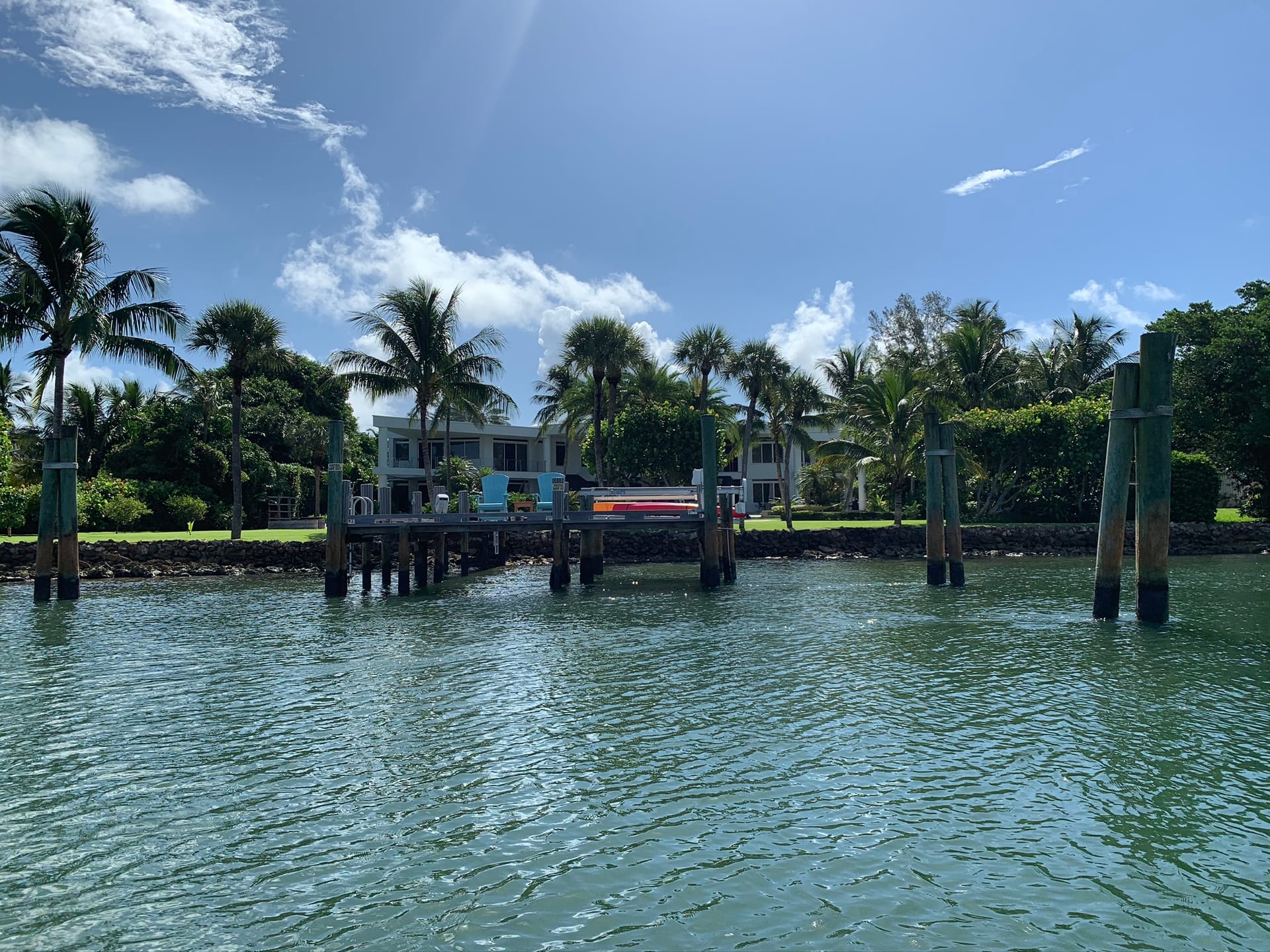
A home with a private dock is not a house with a recreational feature attached. It is a house with privately owned marine infrastructure that needs inspection, maintenance and eventual replacement. Depending on the property that can include:
- Seawall. The big one, and the one most often taken on faith.
- Dock and pilings. Wood in warm salt water is a maintenance schedule, not a fixture.
- Boat lift, with motors, cables, bunks, controls and servicing.
- Marine electrical and water service, shoreline stabilization, riprap, davits and mooring equipment.
- Depth and shoaling, where they apply.
None of it appears in a price per square foot, and two similarly priced homes can carry very different future capital needs.
Seawalls
A seawall is structural infrastructure with a finite service life. It may need repair or replacement because of cracking, corrosion, failing panels, cap deterioration, tie-back problems, soil loss, voids behind the wall, erosion, poor drainage or storm damage — and none of that can be judged from appearance alone.
A standard home inspection may not include a detailed marine-structure evaluation. Where it matters, have a qualified marine contractor or engineer look at the panels, cap, tie-backs or anchors, pilings, drainage, soil loss, signs of movement, the adjacent seawalls and whether there is access for future construction.
Then establish who is legally responsible for the wall. Depending on the property that may be the owner, an association, a neighboring owner, a municipality or another entity — and the answer changes the number materially.
Docks, Pilings and Lifts
Docks live in saltwater, sun, storms, wake and marine organisms. Inspection should cover decking, stringers, pilings, hardware, electrical service, plumbing, lighting, railings, permits and code compliance.
The existence of a dock does not establish that it was properly permitted, or that it could be rebuilt in its current configuration. If your plans depend on replacing or extending it, check the records and take professional advice before closing rather than after.
A boat lift has to match the boat. Verify rated capacity against actual vessel weight and beam, plus bunk configuration, motors, cables, controls, electrical system, pilings, service history and permit status. A lift that handled the seller's boat may not safely handle yours, and both routine service and eventual component replacement belong in the budget.
Depth, Shoaling and Dredging
Some canals, basins and private waterfront areas accumulate sediment and change depth. Before buying, establish depth at the dock and at low tide, navigational depth along your actual route, whether dredging has been done before, who is responsible for it, whether permits would be needed, and whether neighbors or an association share the cost.
Do not assume an individual owner has either the right or the practical ability to dredge a waterway.
Private Dock Versus Marina Slip
Buying inland and keeping the boat at a marina is a real alternative, and it does move some risk off your balance sheet — seawall replacement, dock reconstruction, lift repair, certain dredging problems and shoreline maintenance stop being yours.
But it is not reliably cheaper, which is the claim most often made about it. A marina arrangement brings slip rent, electricity, water, storage, haul-out charges, hurricane plans, insurance requirements, access restrictions, waiting lists, annual increases and minimum lease terms.
Run the actual numbers against each other: the waterfront purchase-price premium, the insurance difference, flood exposure, realistic dock, seawall and lift reserves, current marina charges, whether a slip is even available, travel time and convenience, and how long you expect to own. The better financial answer depends on the household, the boat and the property — our neighborhood guide works through where each option tends to make sense.
Association and Condominium Costs
Association fees vary substantially. Some Stuart-area single-family neighborhoods have no mandatory HOA at all, which is a genuine difference from the master-planned parts of Palm Beach County; others have voluntary associations, mandatory associations or deed restrictions.
Where an association exists, review the current assessment, what it includes, reserve balances, recent increases, special assessments, insurance, planned capital projects, rules and enforcement, rental restrictions and any boat or RV rules.
Worth saying plainly: "no HOA" does not mean "no restrictions." County or city ordinances, zoning, permitting and recorded private restrictions may all still apply.
For a condominium, the monthly fee is the least interesting number. It may cover building insurance, exterior maintenance, landscaping, water, sewer, cable or internet, amenities, management, security and reserves. A higher fee is not automatically bad if it funds adequate insurance, maintenance and reserves; a low fee is not a bargain if major expenses have been deferred.
Structural Inspections and Reserve Studies
Florida law requires qualifying condominium and cooperative buildings to complete milestone inspections and Structural Integrity Reserve Studies in defined circumstances. A Structural Integrity Reserve Study identifies required structural reserve components, estimates remaining useful life and calculates recommended funding, and for covered buildings it must generally be repeated at least every ten years.
Before buying a condominium — and this matters most on Hutchinson Island — review the milestone-inspection reports, the Structural Integrity Reserve Study, engineering reports, reserve balances, the funding plan, the current budget, insurance, recent meeting minutes, special assessments, pending repairs, litigation and planned capital projects.
One thing buyers miss: a completed report does not mean the work it identifies has been done, or funded.
Everyday Costs
Utilities. Electricity use climbs through the hot, humid months for cooling and moisture control, but the actual cost depends on square footage, insulation, windows, roof, air-conditioning efficiency, thermostat habits, pool equipment, occupancy, solar exposure and rates. Older homes are not automatically inefficient and new ones are not automatically cheap to run. Ask for recent utility records where available, remembering that another household's habits are not yours. Also confirm whether the property is on public water and sewer, well water, septic, an irrigation well, propane or association-provided utilities — septic maintenance, well equipment and future connection projects all cost money.
Transportation. Much of the area is car-dependent, so count fuel, tolls, maintenance, insurance, parking, commute time, airport trips and any additional household vehicle. Anyone commuting regularly to Palm Beach County should drive the real route at real work-hour traffic and cost the month out properly. President Donald J. Trump International Airport is the nearest major commercial airport for most residents, though travel time varies by address. There is no operating Brightline station in Stuart, and a proposed future one should not be counted as a transportation benefit you are buying today.
Groceries, shopping and dining. These track household habits more than they track Stuart. The area has supermarkets, local businesses, shopping centers and restaurants, with a smaller selection than a large metropolitan county, and some households drive south periodically for specialty shopping, particular restaurants, entertainment or professional services. Dining activity does rise through winter and spring — but menu prices should not be described as universally higher in season without business-specific evidence. What changes more noticeably is availability, reservations and wait times, as our eating and drinking guide describes.
Boating, where it applies, is its own budget entirely: purchase or financing, registration, insurance, fuel, routine service, engines, electronics, bottom maintenance, storage, dockage, haul-outs, cleaning, safety equipment, storm preparation and repairs. A private dock removes monthly slip rent. It removes none of the rest.
Florida Has No Individual State Income Tax
Florida levies no individual state income tax, which is a meaningful part of the relocation arithmetic for people arriving from a state that does.
It is not, by itself, an affordability argument. The honest comparison also has to carry property taxes, insurance, sales taxes, HOA or condominium fees, transportation, housing costs, healthcare and estate and financial planning. Tax consequences vary by household, and this is a question for your own qualified tax adviser rather than for a real estate guide.
Build a Complete Ownership Budget
For a single-family home: principal and interest, property taxes after reassessment, homeowners insurance, flood insurance, HOA fees, utilities, roof and building maintenance, landscaping, pool maintenance, transportation and an emergency reserve.
For a condominium, add the association assessment, potential special assessments, interior insurance, deductibles, building projects and the possibility of reserve-funding changes.
For waterfront, add a seawall reserve, a dock reserve, lift maintenance, marine electrical work, flood exposure, boat expenses and any dredging or depth issues.
The Bottom Line
Stuart's cost of living does not reduce to a price comparison against Palm Beach County. The individual property matters more than the town.
An inland home with no association may have a genuinely straightforward ownership budget. A similarly priced waterfront home can add flood cover, a percentage-based hurricane deductible, seawall reserves, dock maintenance and boat-lift expenses. A condominium may cut your personal exterior maintenance while adding association fees, structural-reserve obligations and the possibility of assessments.
Build the number from an updated property-tax estimate, actual written insurance quotes, the association documents, professional inspections, realistic maintenance reserves and the full cost of commuting or boating — not from the seller's taxes, the seller's premium or the listing price.
A property can be affordable at closing and expensive to keep. The question is never only what it costs to buy. It is what it will cost you to own.
Figures and rules change. Verify tax, exemption and assessment details with the Martin County Property Appraiser and Tax Collector, insurance with a licensed agent, flood zone and elevation with the relevant authority, and association obligations with the governing documents.
Community Guide
Neighborhoods, schools, prices, and lifestyle — all in one place.
Stuart Market Trends
Live data from the local MLS.
Thinking about Stuart?
We're local experts — let's find the right home for your move.
Homes for Sale in Stuart
Single-family homes $500k+, updated daily.
Free — August 2026 Martin County Numbers
Martin County Houses Are Selling Three Weeks Faster
In August 2026, houses went under contract in 56 days, down from 77 a year ago, and what is for sale dropped by more than a fifth. The typical house sold for $656,900. Every number is Martin County — Stuart, Palm City, Hobe Sound and Port Salerno — not Palm Beach County.
Free instant PDF · No obligation · See what's inside →
Frequently Asked Questions
Is Stuart, Florida expensive to live in?
Comparable homes generally price below the Palm Beach County coast, sometimes substantially. The variable that matters most is not the town but the property: waterfront with a dock carries a purchase premium plus ongoing seawall, dock, lift and flood costs that never appear in a price-per-square-foot comparison, while an inland home with no association can have a much simpler budget at a similar price.
Why do property taxes go up after buying a home in Florida?
Because the Save Our Homes assessment limitation resets on sale. It caps annual increases in an existing homestead's assessed value at the lower of 3% or the change in CPI, so a long-time owner's assessed value can sit far below market — and that accumulated benefit belongs to them, not to the property. After a change of ownership the property is generally reassessed for the next assessment year. Estimate from your own purchase price and current millage, use the Martin County Property Appraiser's estimator, and check which jurisdiction the address is in, because Stuart, Sewall's Point, Ocean Breeze and unincorporated Martin County levy differently.
Do I need flood insurance in Stuart, Florida?
It depends on the parcel, and flood cover is always separate from a homeowner policy. Flood zones vary street by street in a river-and-lagoon town, so proximity to water does not automatically mean a high-risk zone and distance from it is no guarantee — being outside a high-risk FEMA zone does not mean a property cannot flood. Obtain the flood zone determination for the specific address. Note that under the NFIP's current Risk Rating 2.0 methodology an elevation certificate is no longer required and no longer sets the premium as it once did, though providing one may still lower the rate where FEMA's own elevation data understates the building.
How much is the homestead exemption in Martin County?
For 2026 a qualifying Florida homestead receives $25,000 off assessed value for all taxing authorities, plus an inflation-adjusted additional exemption — $26,411 in Martin County for 2026 — on assessed value above $50,000, for a total of $51,411. The additional portion does not apply to school taxes. The indexed figure changes annually, the standard filing deadline is March 1, and approval is not automatic, so apply directly through the Martin County Property Appraiser.
What does it cost to own a dock and seawall in Stuart?
More than most buyers expect, and it cannot be judged from appearance. A seawall is structural infrastructure with a finite service life that may fail through cracking, corrosion, failing panels, cap deterioration, tie-back problems, soil loss or voids behind the wall, and a standard home inspection may not evaluate marine structures at all. Docks and pilings in warm salt water are a maintenance schedule rather than a fixture, boat lifts need servicing and eventual replacement, and some canals require dredging. Establish who is legally responsible for the seawall — owner, association, neighbor or another entity — before you close.
Is renting a marina slip cheaper than buying waterfront in Stuart?
Not reliably, despite how often it is said. A marina does move seawall replacement, dock reconstruction, lift repair and some dredging risk off your balance sheet, but it adds slip rent, electricity, water, storage, haul-out charges, hurricane plans, insurance requirements, access restrictions, waiting lists, annual increases and minimum terms. Compare the actual figures — the waterfront price premium, the insurance difference, realistic dock and seawall reserves, current marina charges, slip availability and how long you plan to own.
Do homes in Stuart have HOA fees?
Many Stuart-area neighborhoods have no mandatory HOA, which differs from the master-planned parts of Palm Beach County; others have voluntary or mandatory associations or deed restrictions. Where one exists, review the assessment, reserves, recent increases, special assessments, insurance and rental rules. Note that no HOA does not mean no restrictions — county and city ordinances, zoning, permitting and recorded private restrictions can all still apply. Condominium associations, particularly on Hutchinson Island, deserve the closest review, including milestone inspections and the Structural Integrity Reserve Study.
Keep Reading
This article is provided by DO Homes Group at Premier Brokers International for informational purposes only and does not constitute legal, financial, tax, or investment advice. Market statistics, pricing, availability, HOA fees, and community details change frequently and may have changed since publication. School assignments, boundaries, and ratings may change — verify all school information directly with the appropriate school district, and consult official public safety resources for any crime data relevant to your search. Verify all details independently and consult the appropriate licensed professionals before making any real estate decision. DO Homes Group is committed to Equal Housing Opportunity and does not discriminate on the basis of race, color, religion, sex, handicap, familial status, or national origin.