
Jupiter · Local Guide
A Local's Guide to Jupiter, Florida
How Jupiter is organized, where the public waterfront is, how to get around, what the seasons change, and what to set up in the first 90 days.
By Christine DekantUpdated

Jupiter is easier to live in once you know how it is put together. "Jupiter" can mean the incorporated Town of Jupiter, a mailing address that reaches well beyond the Town, or nearby places that are separate municipalities or unincorporated Palm Beach County. The exact property address decides which government you deal with, which rules apply, who provides water and sewer, and what the flood and evacuation details are.
This guide is the orientation we give people after a move: how the area is organized, where the public waterfront and parks are, how getting around works, what the seasons change, and what to set up in the first 90 days. Where a detail changes over time, it links to the official source rather than freezing it into the page.
In this guide
Orient yourself: boundaries versus search areas
Two different maps matter. One is the legal map of who governs an address. The other is the informal map people use when they search for a home. Keep them separate.
The legal map
| Place | What it is | What it means for an address |
|---|---|---|
| Town of Jupiter | An incorporated municipality with its own council, police department, planning and zoning, building permits and code enforcement. | Town rules, Town permits and Town police. The Town's FAQ puts it plainly: you are an incorporated resident if you pay taxes to the Town, and attending Jupiter schools or having Jupiter water does not make you one. |
| Jupiter Farms and other unincorporated areas | Unincorporated Palm Beach County. The Town's FAQ names Jupiter Farms and Jonathan's Landing as examples. | County zoning, County permits, County code enforcement and the Palm Beach County Sheriff's Office. A Jupiter mailing address does not change that. |
| Village of Tequesta | A separate municipality north of the Town. | Its own council, police, zoning and permitting. |
| Town of Jupiter Inlet Colony | A separate small municipality on the south side of the inlet. | Its own government and its own beach rules. |
To settle which one a parcel is in, use the Town's 2025 Zoning Map, the County's boundary maps, or the parcel's record at the Palm Beach County Property Appraiser, which lists its taxing authorities. Juno Beach to the south is a separate town as well, and Jupiter Island across the inlet is in Martin County.
The search map
When people shop for a home, they tend to think in areas rather than jurisdictions. These are descriptions, not boundaries, and each one can straddle more than one government:
- The coast and the inlet. Oceanfront and near-ocean homes along State Road A1A, and the neighborhoods around the inlet and the lower Loxahatchee River. This area includes parts of the Town, Jupiter Inlet Colony and Tequesta.
- Abacoa. A master-planned district in the Town built around a town center, a baseball stadium and a university campus, with its own associations and rules.
- The western and nature-oriented areas. Toward Riverbend Park and the Northwest Fork of the river, and on to the larger lots of Jupiter Farms, which is unincorporated county.
- The US-1 and Indiantown Road corridors. The two main roads most errands run along. They are corridors, not neighborhoods, and homes near them fall under whichever government the parcel is in.
Public waterfront, parks and outdoor access
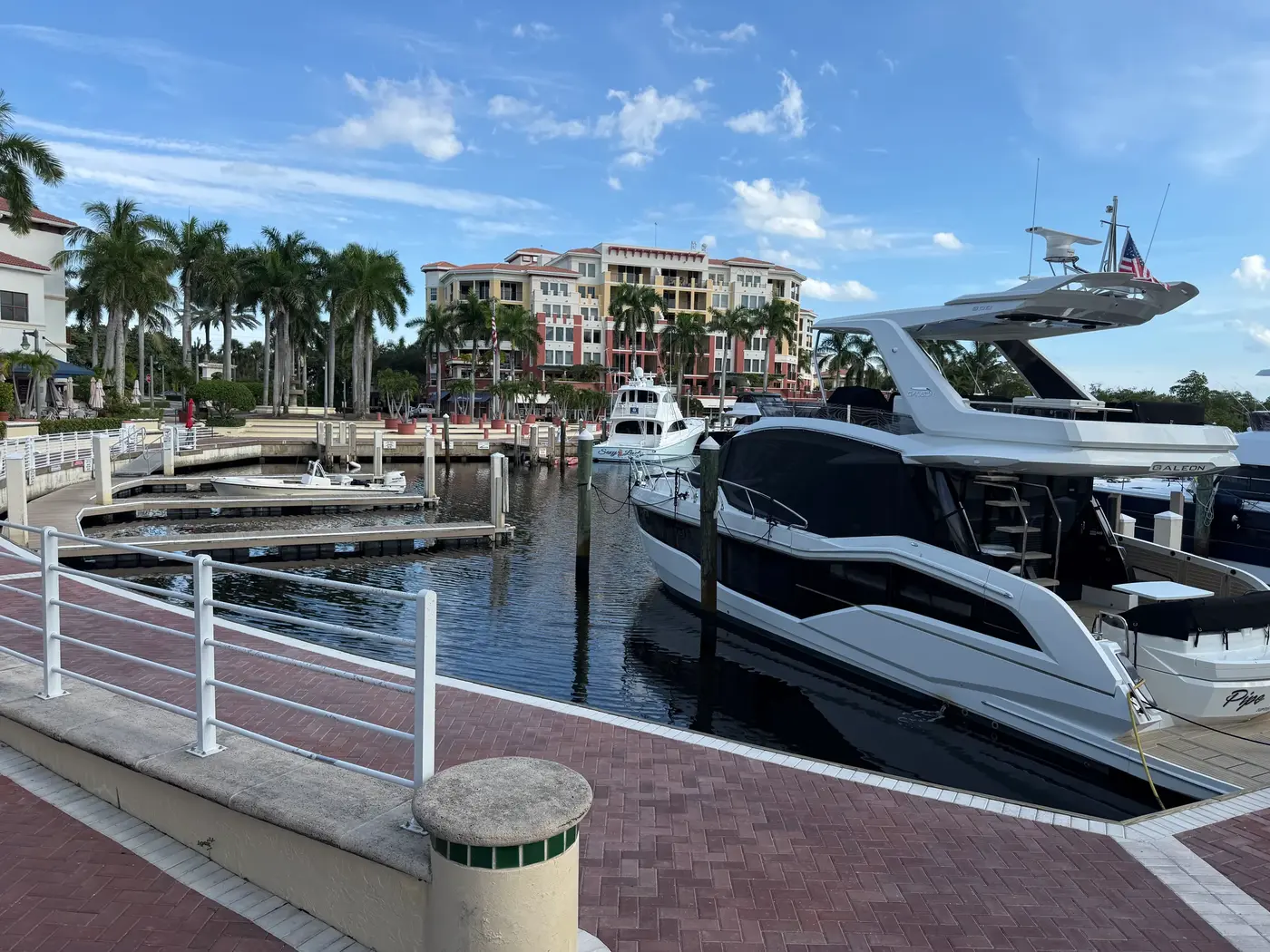
Much of Jupiter's waterfront is public, and most of it is run by Palm Beach County Parks rather than the Town. These are the anchors, with the official page for each so you can check current hours, closures and rules before you go:
- Riverbend Park**, 9060 Indiantown Road. A 644-acre County park on the Loxahatchee River with hiking, biking, equestrian and paddling trails. The County notes its canoe trails are navigable in normal to high water and close in drought.
- Burt Reynolds Park**, 805 U.S. Highway 1. A County park on the Intracoastal with boat ramps, day-use slips, a kayak and paddleboard launch, picnic areas and a playground. A trailer parking permit is required.
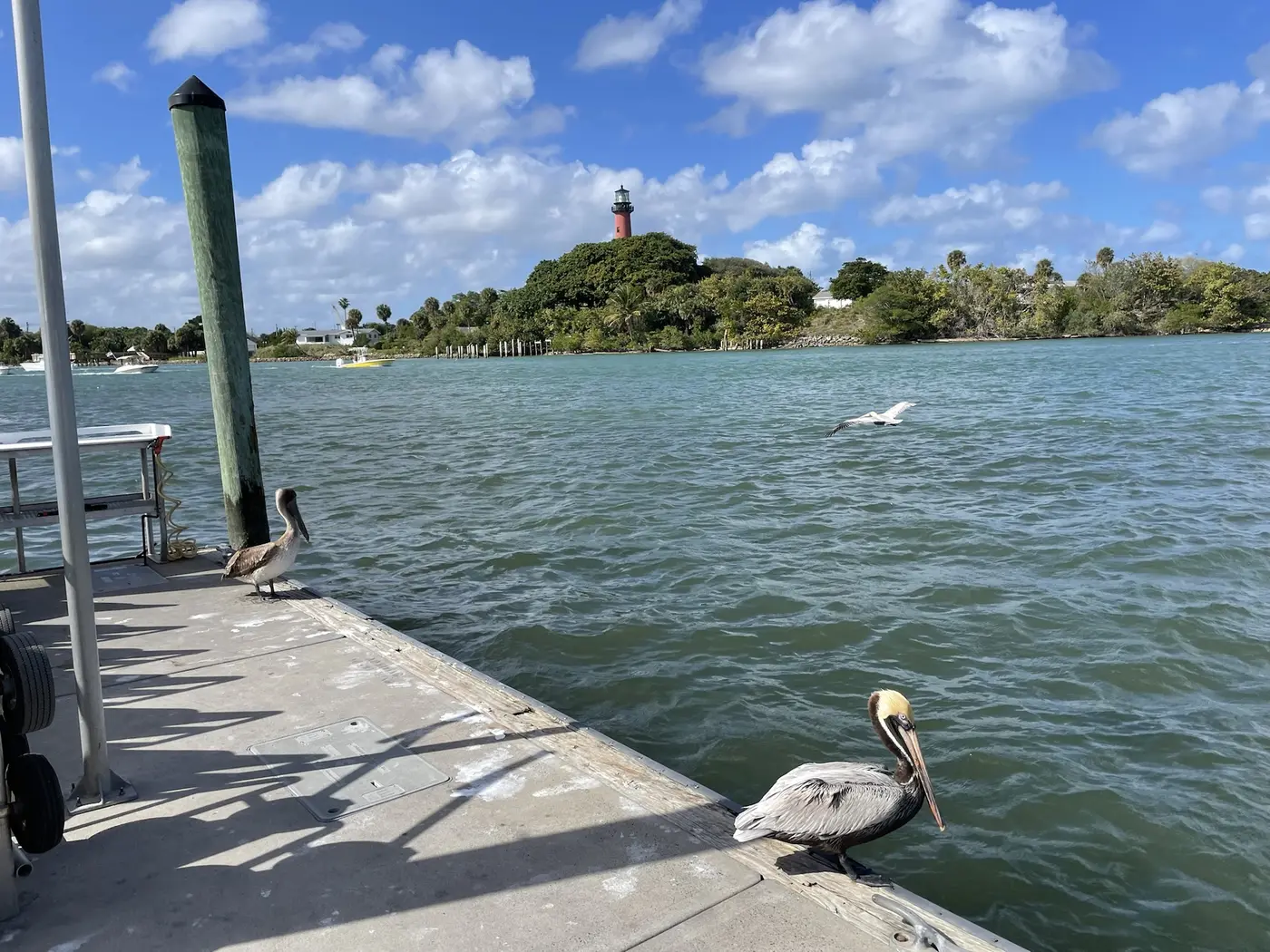
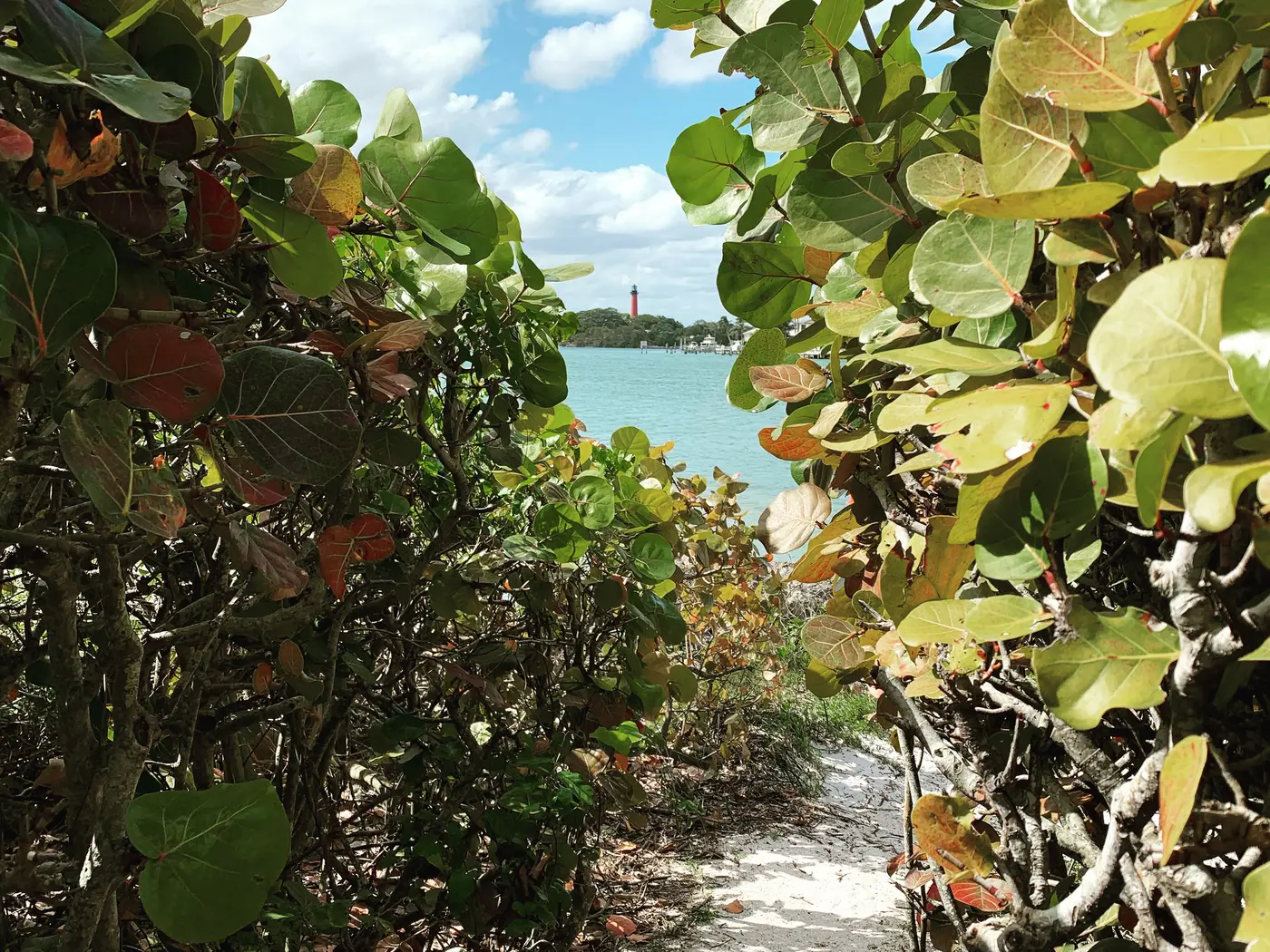
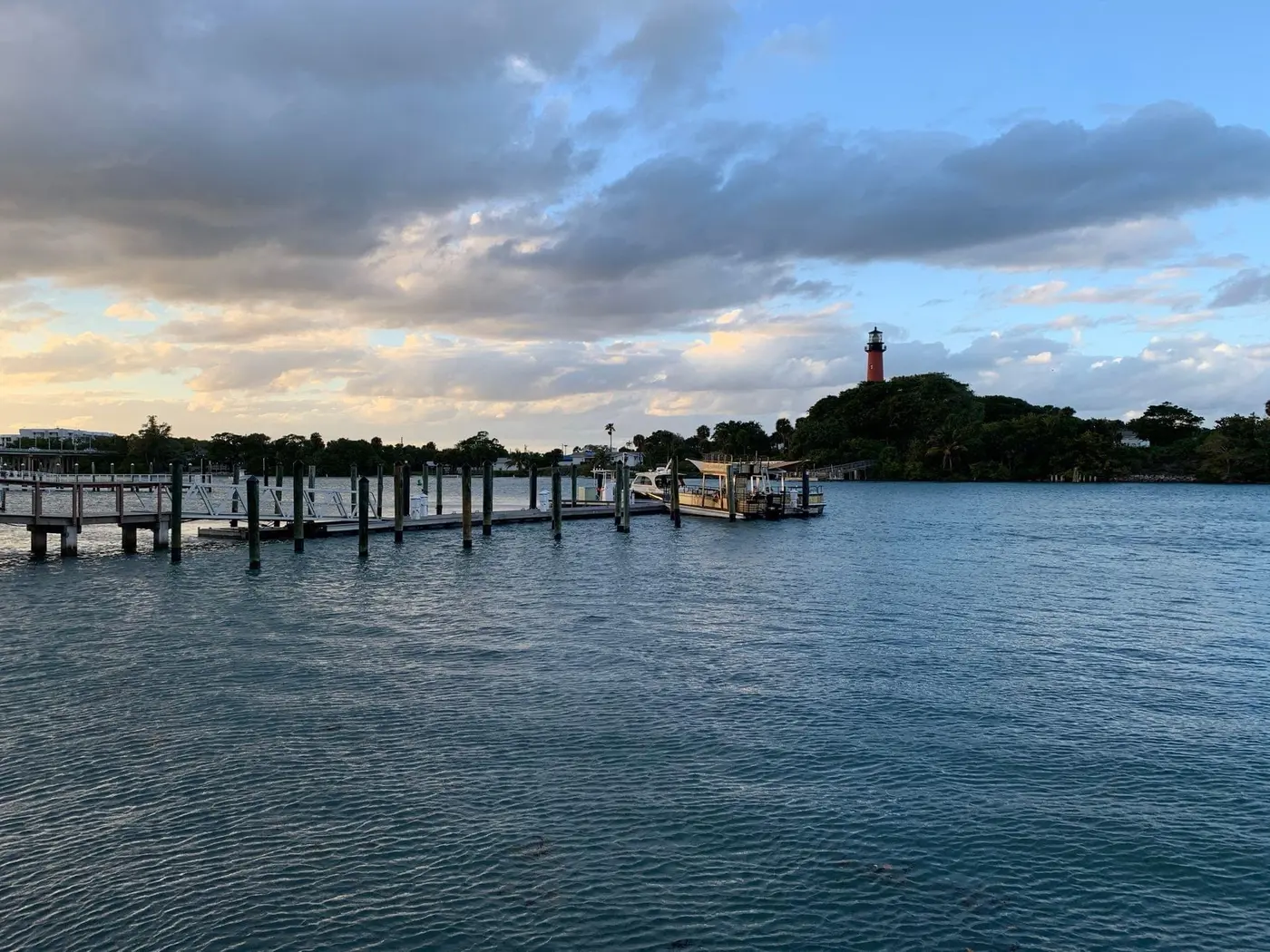
- The inlet and lighthouse area. DuBois Park on the south side of the inlet has lagoon and Intracoastal frontage, a guarded swimming area and a ramp for non-motorized boats. Jupiter Beach Park sits beside it on the ocean. Across the water, the Jupiter Inlet Lighthouse Outstanding Natural Area has trails and the lighthouse museum.
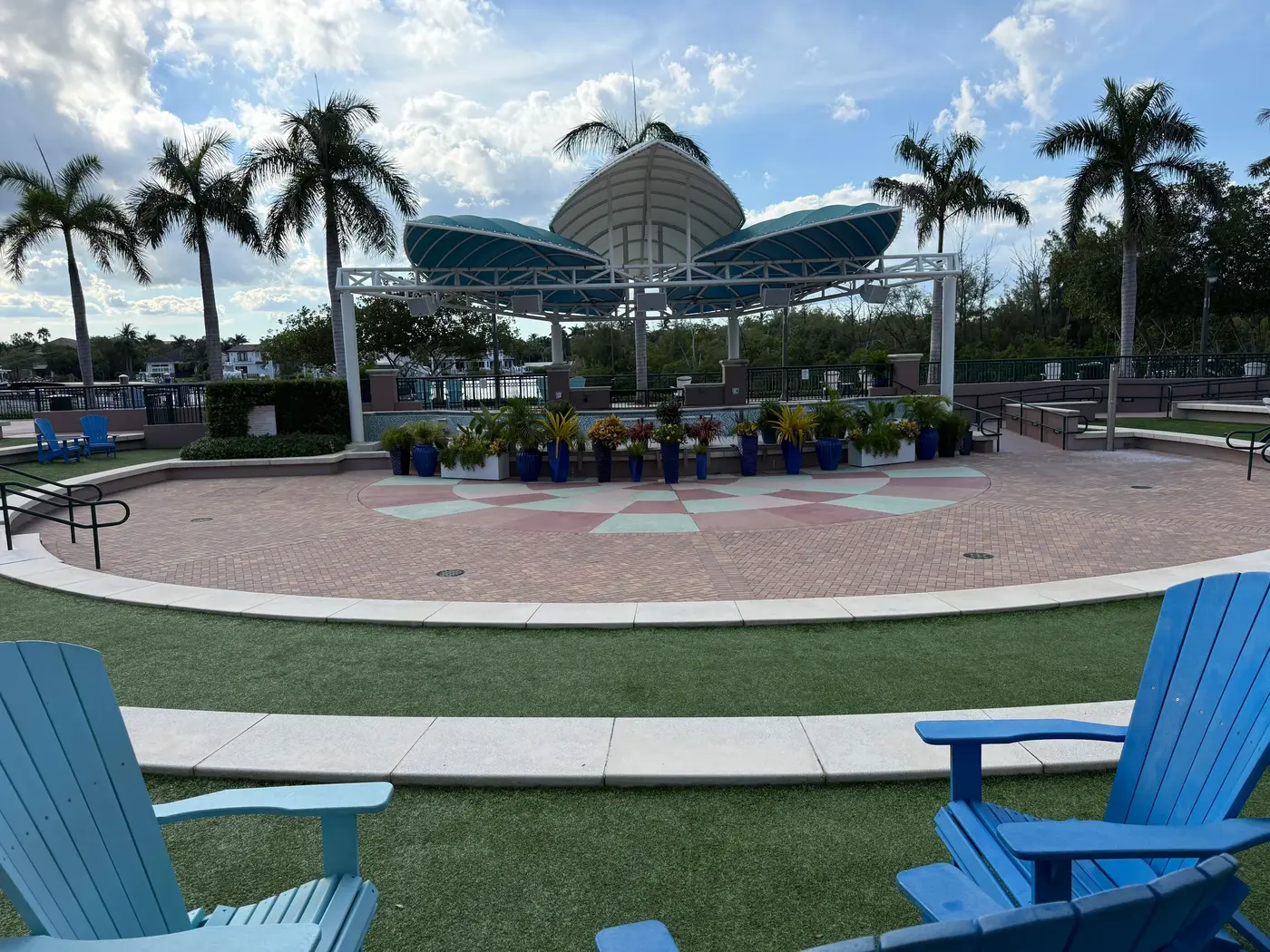
- The Riverwalk. The Town's Riverwalk is a multi-phase public trail along the eastern shore of the Intracoastal. Sections are open; the Town describes the completed network as approximately 2.5 miles. Our Riverwalk guide walks the open parts.
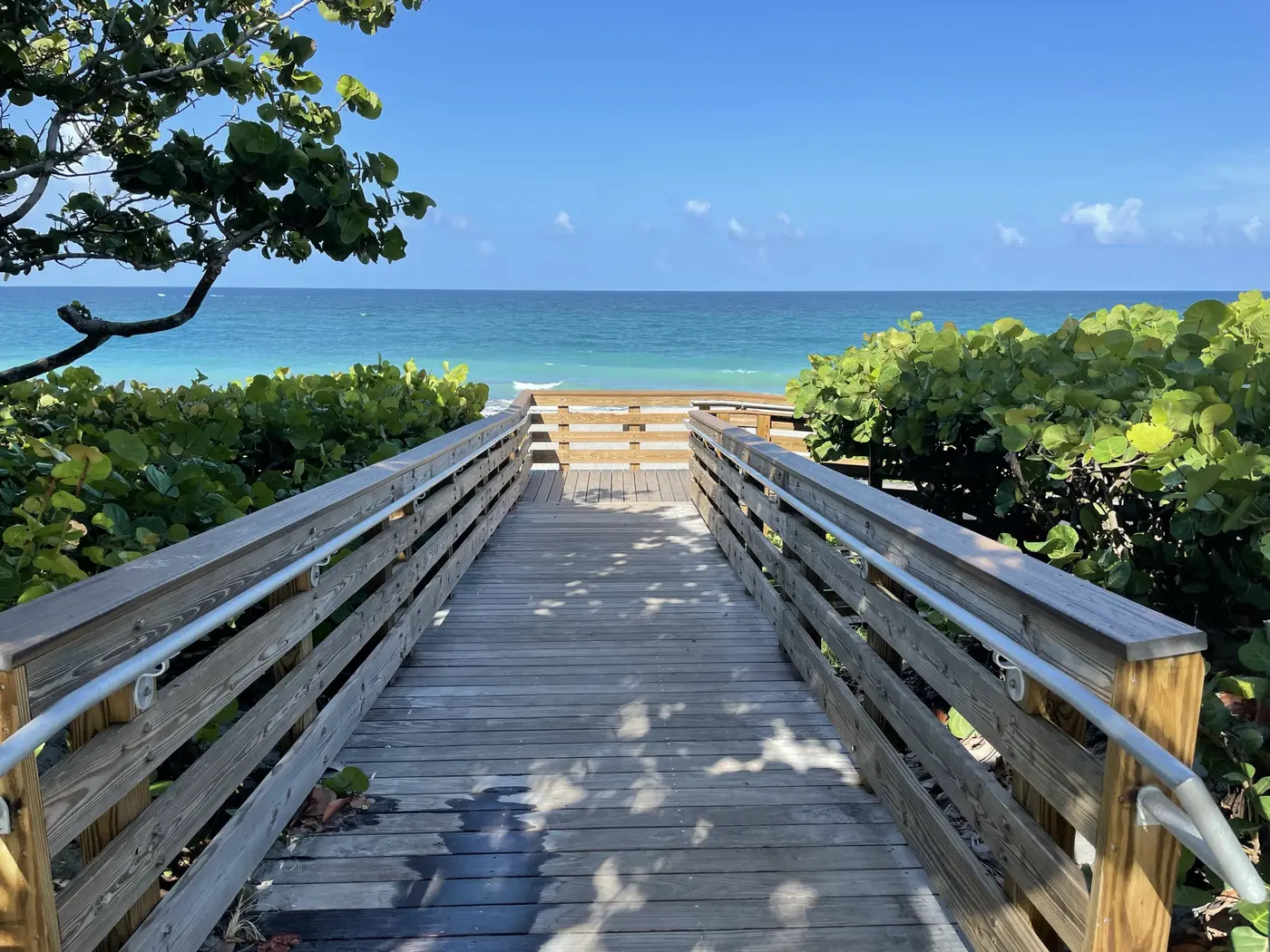
- Ocean beach access. The Town's Beaches page and the County parks along A1A, including Carlin Park and Ocean Cay Park, are the public ways onto the sand, along with numbered dune crossovers.
The dog beach is a designated corridor, not every beach. The Town's Dogs on the Beach page sets the rules: dogs are allowed between dune crossover marker #26, north of Ocean Cay Park, and marker #57, south of Carlin Park, under voice control, leashed between the car and the sand, out of lifeguarded swimming areas, and cleaned up after. Outside that corridor, and on beaches belonging to Jupiter Inlet Colony and Juno Beach, different rules apply.
What this page does not promise: parking, lifeguard coverage, water or surf conditions, wildlife sightings, or whether a ramp or trail is open on a given day. Each official page above is the place to check.
Getting around and planning routes
A car is practical for many errands in Jupiter. Groceries, medical offices, the beach, marinas and schools tend to sit on different corridors, and most households drive between them. That is not the same as having no transit: Palm Tran Route 10 runs between Jupiter and Palm Beach Gardens, and whether it fits a routine depends on the exact address and the current schedule, which Palm Tran changes from time to time.
Two things shape routes here more than in most towns:
- Drawbridges. The Town's North County Draw Bridge Schedule lists how each bridge opens. At the time of writing it shows the Indiantown Road bridge opening on the hour and half hour and the US-1 bridge opening on demand, but the page is the authority, not this article.
- Roadwork. Bridge and road projects come and go. The Town's Notify Me lists include a construction and road-closure bulletin, and the Town's homepage carries current notices.
We don't publish rush-hour windows, airport drive times or alternate-route advice, because they go stale and depend on where you start. Drive your own routes at the hours you would use them before you commit to an address.
Seasonal, beach and turtle planning
Jupiter's year has a busier cooler season and a hotter, wetter summer, and a few fixed dates worth knowing:
- Sea turtle nesting season is March 1 through October 31 in Palm Beach County, per the Town's Beach FAQ. Leatherbacks, loggerheads and greens nest on Jupiter and Juno beaches. Marked nests are off limits.
- Beachfront lighting rules are property-specific. The Town's FAQ points to Palm Beach County Environmental Resources Management as the regulator of coastal lighting, and the FWC's sea turtle lighting guidance explains the principles: keep lights low, long-wavelength and shielded, and tint windows that face the beach. Whether a particular home has to change fixtures, and which fixtures, depends on its location and the applicable Town, County and state rules. Check those before changing exterior lighting or beachfront vegetation.
- Hurricane season runs June 1 through November 30. Preparation is covered below.
Crowds, restaurant availability, weather and storm impacts are not things a guide can forecast. Plan around the dates above and the official sources, not around predictions.
Services and the first 90 days after a move
This is the part that saves money and headaches. Work through it address by address, because almost every item depends on where the property sits.
- Confirm the municipality and the service providers for the address. The Town's New Resident Guide lists who provides what inside the Town: electricity from Florida Power & Light, water and stormwater from Town of Jupiter Utilities, sewer from the Loxahatchee River District, and natural gas from TECO or Florida Public Utilities. Garbage, recycling and yard waste inside the Town are billed on the water bill. Outside the Town, the providers can differ.
- Check the water utility's service area. Town of Jupiter Utilities serves beyond the Town limits, into Juno Beach and unincorporated parts of Palm Beach and Martin counties, per its utilities page. Having Jupiter water does not make an address part of the Town, and some Jupiter-area homes are on wells or septic rather than municipal service.
- Confirm flood, evacuation and insurance details for the parcel. The flood zone, base flood elevation, whether an elevation certificate is on file, the County evacuation zone, and written wind and flood quotes. The Town's storm hub and flood information pages explain how to look each one up.
- File for homestead exemption if the home is your permanent residence. Per the Palm Beach County Property Appraiser, eligibility is measured as of January 1 and the normal filing deadline is March 1 of the year the benefit applies. You can file online.
- Treat a wind-mitigation inspection as insurance diligence. It documents the roof, openings and attachments for your insurer. Whether it changes a premium depends on the home and the carrier, so don't count on a credit until the quote shows one.
- Build a storm plan. Know the evacuation zone, where shutters or impact protection are, what the association does before a storm, and sign up for the Town's Notify Me alerts and County emergency notifications.
- For waterfront and coastal homes, add the water-specific items. Elevation and flood risk for the structure, the condition and permits of any dock, lift or seawall, who approves repairs, salt-air maintenance, and exactly what conveys with the deed. Our living in Jupiter guide has a fuller due-diligence section.
Costs for all of this vary by home, and our Jupiter cost of living guide walks through the lines on a Jupiter tax and insurance bill.
Keeping up with Jupiter
Rather than a calendar that goes out of date, use the sources that update themselves:
- Town events and recreation. The Town's Special Events page and its Parks and Recreation calendar list what is scheduled and how to register.
- County park programming. Riverbend, Burt Reynolds and the beach parks post programs and closures on their County pages, linked above.
- Baseball. Roger Dean Chevrolet Stadium publishes the spring training and minor-league schedule each season.
- Town notices. Notify Me sends Town news, utility and trash updates, and construction bulletins by email or text.
- The broader picture. For how the areas compare, read best neighborhoods in Jupiter, Jupiter vs nearby cities, and, for restaurants and bars, the eat, drink and hang out guide.
The short version
Find out which government the address answers to. Learn where the public waterfront and parks are and check their pages before you go. Expect to drive for many errands, and plan around bridges and roadwork using the Town's live sources. Know the turtle season and the hurricane season dates. Then work the 90-day checklist, one address at a time. Jupiter rewards people who do that homework, because so much of what makes it good to live in is tied to the specific place you choose.
Community Guide
Neighborhoods, schools, prices, and lifestyle — all in one place.
Jupiter Market Trends
Live data from the local MLS.
Homes for Sale in Jupiter
Single-family homes $500k+, updated daily.
Next step
Looking at a specific Jupiter address? Start with the community guide and current listings, or ask us about the property and the checklist above.
Frequently Asked Questions
Does a Jupiter mailing address mean the home is in the Town of Jupiter?
No. The Jupiter postal area includes the Town of Jupiter, unincorporated Palm Beach County such as Jupiter Farms and Jonathan's Landing, and separate municipalities such as Tequesta and Jupiter Inlet Colony. The Town's own FAQ says you are an incorporated resident only if you pay taxes to the Town; having Jupiter water or attending Jupiter schools does not qualify. Check the Town zoning map, the County boundary maps or the Property Appraiser record for the parcel.
Where is the public waterfront in Jupiter?
Mostly in Palm Beach County parks: Riverbend Park on the Loxahatchee River, Burt Reynolds Park on the Intracoastal with boat ramps and a paddle launch, DuBois Park and Jupiter Beach Park at the inlet, and Carlin Park and Ocean Cay Park on the ocean. The Town maintains the Riverwalk along the Intracoastal and the public beach crossovers. Each official page lists current hours, rules and closures.
Can I bring my dog to the beach in Jupiter?
Only within the designated corridor, from dune crossover marker #26 north of Ocean Cay Park to marker #57 south of Carlin Park, under voice control, leashed between the car and the sand, out of lifeguarded swimming areas, and cleaned up after. It is not every Jupiter beach, and beaches in Jupiter Inlet Colony and Juno Beach have their own rules. The Town of Jupiter publishes the current rules.
Is there public transit in Jupiter?
Yes. Palm Tran Route 10 serves Jupiter and Palm Beach Gardens. Whether it works for a particular routine depends on the exact address and the current schedule, which Palm Tran publishes and updates. A car is still practical for many errands, since destinations are spread along several corridors.
When is sea turtle nesting season in Jupiter?
March 1 through October 31 in Palm Beach County, per the Town of Jupiter. Leatherback, loggerhead and green turtles nest on Jupiter and Juno beaches. Beachfront lighting rules are set by location and property, with Palm Beach County Environmental Resources Management as the regulator and FWC guidance on low, long-wavelength, shielded lighting, so check the applicable rules before changing exterior lights or beach vegetation.
What should I set up in the first 90 days after moving to Jupiter?
Confirm the municipality and service providers for the address; confirm water, sewer, sanitation, flood zone, evacuation zone and insurance details for that parcel; file for homestead exemption if it is your permanent residence, since eligibility is measured as of January 1 and the normal deadline is March 1; treat a wind-mitigation inspection as insurance diligence rather than guaranteed savings; build a storm plan and sign up for Town and County alerts; and, for waterfront homes, add elevation, dock, seawall and permit checks.
How do I keep up with events and notices in Jupiter?
Use the Town's Special Events page and Parks and Recreation calendar, the County park pages for Riverbend, Burt Reynolds and the beach parks, the Roger Dean Chevrolet Stadium schedule, and the Town's Notify Me email and text lists for news, utility and trash updates and construction bulletins.
Keep Reading
This article is provided by DO Homes Group at Premier Brokers International for informational purposes only and does not constitute legal, financial, tax, or investment advice. Market statistics, pricing, availability, HOA fees, and community details change frequently and may have changed since publication. School assignments, boundaries, and ratings may change — verify all school information directly with the appropriate school district, and consult official public safety resources for any crime data relevant to your search. Verify all details independently and consult the appropriate licensed professionals before making any real estate decision. DO Homes Group is committed to Equal Housing Opportunity and does not discriminate on the basis of race, color, religion, sex, handicap, familial status, or national origin.